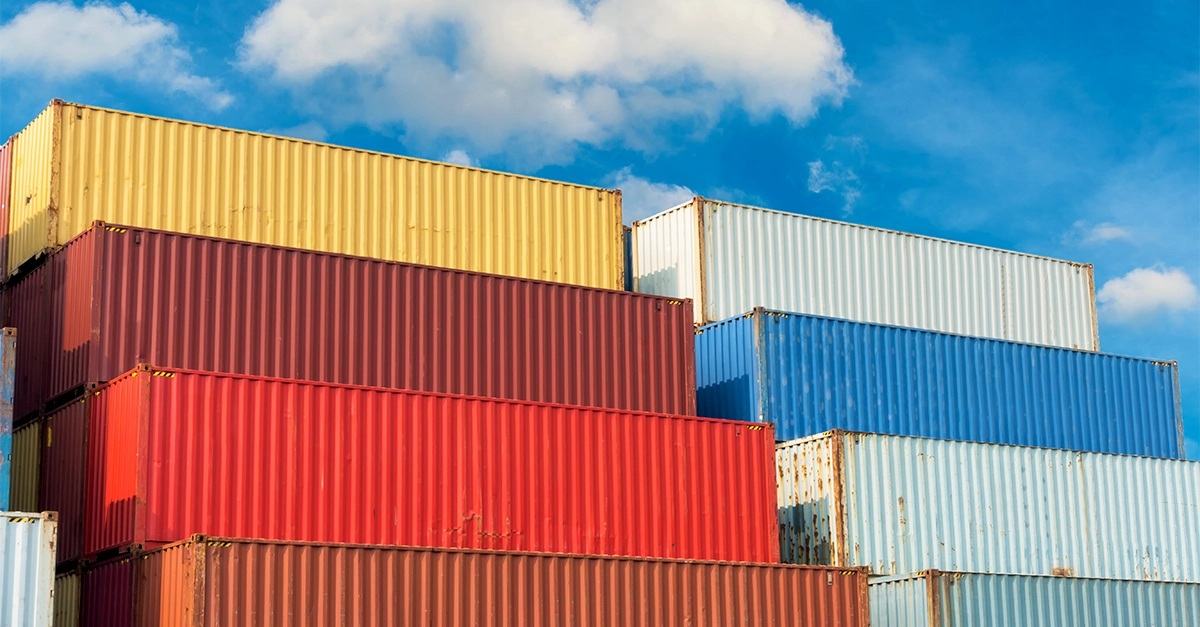
Types of Shipping Containers and Their Applications in International Transport
In the cargo transportation process, selecting the appropriate container is one of the most critical operational decisions. The choice of container directly affects cargo safety, delivery efficiency, and overall logistics costs. Selecting the correct container ensures that cargo reaches its destination securely while optimizing handling operations and minimizing transportation expenses.
Shipping containers are manufactured in a wide range of designs and dimensions, each developed to accommodate specific cargo types and load volumes. In this guide, we review the main types of maritime containers used in international shipping to help shippers select the most suitable option for their cargo.
Types of Maritime Shipping Containers
Containers are engineered in various configurations and functional designs. Some are optimized for temperature‑sensitive goods, others for heavy industrial machinery, and some for transporting live animals. Below we examine the key characteristics of each container type and the types of cargo they are best suited to carry.
Dry Container
Dry containers are among the most widely used units in maritime shipping. They feature a fully enclosed and sealed structure designed to protect cargo from environmental factors such as water ingress, humidity, dust, and weather fluctuations.
The walls and roof of these containers are typically constructed from high‑strength steel or aluminum, providing strong resistance to mechanical impact, pressure, and corrosion.
Dry containers are generally available in 20‑foot and 40‑foot standard sizes and are used to transport a broad range of dry, packaged cargo that does not require temperature control.
Refrigerated Container (Reefer Container)
Refrigerated containers resemble standard dry containers in appearance but are equipped with an integrated refrigeration unit and precise temperature control system.
Their structure is typically made of Corten or self‑protecting steel with thermal insulation to maintain stable internal temperatures. Reefer containers are designed for transporting perishable and temperature‑sensitive cargo, including food products, pharmaceuticals, and certain chemicals.
Reefer containers can generally be categorized into three types based on cooling capacity and temperature range:
- Standard reefer containers, capable of maintaining temperatures between ‑25°C and +25°C, commonly used for transporting semi‑sensitive food and pharmaceutical products.
- High‑capacity refrigerated containers, capable of maintaining temperatures down to ‑35°C, typically used for transporting frozen meat products and specialized frozen cargo.
- Super freezer containers, capable of maintaining temperatures as low as ‑70°C, primarily used for transporting medical samples, vaccines, and sensitive biological materials.
ISO Tank Container
ISO tank containers are specifically designed for the transportation of liquids and gases. Their construction utilizes high‑grade stainless steel and corrosion‑resistant alloys, ensuring durability when transporting chemical, petroleum, or corrosive substances.
Inside the frame of the container is a cylindrical tank that holds the liquid or gaseous cargo.
According to safety standards, the tank is typically filled to only 80–95% of its total capacity, allowing sufficient expansion space for gases and minimizing the risk of leakage or pressure‑related accidents.
The engineering design of ISO tank containers enables the safe transportation of hazardous and sensitive liquid cargo, even on long maritime routes and under demanding ocean conditions.
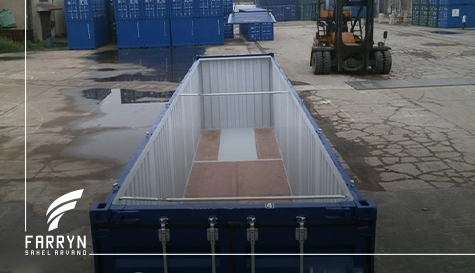
Open Top Container
Open top containers do not have a rigid steel roof. Cargo loading is usually performed from above using cranes.
These containers are particularly suitable for transporting oversized industrial equipment or cargo with excessive height that cannot be loaded through standard container doors.
If necessary, the container can be covered with a tarpaulin (tarp) sheet to protect cargo from rain, direct sunlight, or dust.
Additionally, lashing rings are installed along the container walls to secure cargo and maintain load stability during transportation.
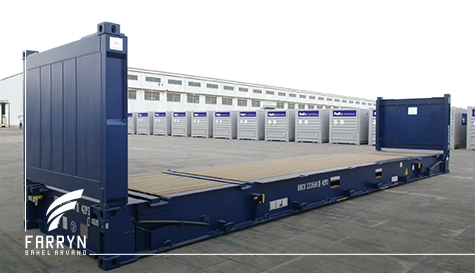
Flat Rack Container
Flat rack containers are designed for transporting oversized or irregularly shaped cargo that cannot fit within conventional container structures.
These containers do not have a roof or side walls. The end walls at both sides are short and foldable, allowing greater flexibility in cargo handling.
Flat racks feature a reinforced base structure capable of supporting extremely heavy loads. Cargo can be loaded either from the top or from the sides, making them ideal for transporting:
- Heavy machinery
- Construction equipment
- Long pipes
- Boats
- Large steel structures
- Wide or high‑profile cargo units
Their open design provides maximum flexibility for transporting out‑of‑gauge (OOG) cargo.
Double Door Container (Tunnel Container)
Double door containers—also referred to as tunnel containers—feature doors at both ends of the container.
This design is particularly advantageous for loading and unloading long cargo items such as steel beams, pipes, profiles, and metal construction materials.
Since cargo can be accessed from both ends, handling operations become faster and more efficient, especially for heavy or elongated shipments. However, one side can also remain closed, allowing the container to function similarly to a standard unit.
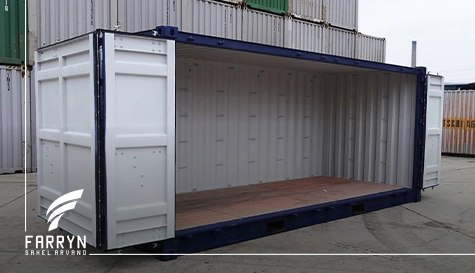
Open Side Container
Open side containers feature side panels that open fully, providing access to the entire internal space.
Certain cargo types—such as large industrial components, cabinetry, or oversized shelving units—can be difficult to load through conventional front doors. The open‑side design simplifies loading and unloading operations for these types of shipments.
Structurally, these containers are similar to standard containers but provide greater operational flexibility during cargo handling.
Insulated Container
Insulated containers do not have an active refrigeration or heating system. Instead, their thermally insulated walls reduce rapid temperature fluctuations during transit.
A mechanical compressor system may be used to help maintain temperature stability, making these containers suitable for short‑distance routes or cargo with moderate temperature sensitivity.
Certain chemicals and products that require temperature stability but not extreme cooling are commonly transported using insulated containers.
These containers are typically available in 20‑foot sizes.
Ventilated Container
Ventilated containers are equipped with air vents integrated into the walls or roof, enabling natural air circulation inside the container.
Some commodities require continuous airflow to prevent mold growth, moisture accumulation, or spoilage during transport. Examples include:
- Coffee beans
- Cocoa
- Tea
Ventilated containers help maintain cargo quality throughout the shipping journey.
Special Purpose Container
Special purpose containers are designed for cargo that cannot be transported using standard container equipment due to unique dimensions, shapes, or handling requirements.
These containers are often custom‑built or semi‑customized based on the exact characteristics of the cargo. Because of their higher design and manufacturing costs, they are typically used in large industrial projects or for transporting unique equipment.
One example is the live animal transport container. These containers are specifically designed with ventilation systems and sanitation facilities to safely transport animals. Their internal layout reduces animal stress and ensures their well‑being during transit.
Container Sizes
Containers are manufactured in various sizes and capacities to accommodate different cargo volumes and operational requirements.
20‑Foot Container
A standard 20‑foot container typically has:
- Internal length: approximately 8.5 meters
- Internal width: 2.3 meters
- Internal height: 2.2 meters
Its cargo capacity generally ranges between 21 and 28 tons.
These containers are commonly used for transporting dense or heavy cargo that does not occupy large volumes, such as metals, tiles, and ceramic products.
40‑Foot Container
A 40‑foot container has an approximate length of 12 meters and provides significantly more internal volume than the 20‑foot model.
Its loading capacity is around 68 cubic meters, making it suitable for transporting larger and more voluminous cargo.
Most container types—such as dry containers, reefers, flat racks, open tops, and insulated containers—are available in both 20‑foot and 40‑foot configurations.
High Cube Containers
High Cube containers are typically available in 40‑foot and occasionally 20‑foot sizes. Their primary difference from standard containers is increased internal height.
High Cube containers provide approximately 30 centimeters of additional internal height, allowing more efficient loading of bulky cargo.
They are generally used for high‑volume shipments that are relatively lightweight.
45‑Foot High Cube Container
The 45‑foot High Cube container is longer and taller than the standard 40‑foot container.
Typical specifications include:
- Length: approximately 13.5 meters
- Height: approximately 2.7 meters
- Volume capacity: around 86 cubic meters
- Maximum payload: approximately 27 tons
These containers are commonly used for very large or high‑volume shipments requiring additional cargo space.
Which Container Is Right for Your Shipment?
Now that we have reviewed the different container types, selecting the right container should be based on cargo weight, volume, cargo characteristics, and transportation conditions to ensure the shipment reaches its destination safely and cost‑effectively.
The correct container choice has a direct impact on cargo safety, delivery time, and total transportation costs. An incorrect decision can lead to operational delays, cargo damage, or increased logistics expenses.
The logistics specialists at Farryn Sahel Arvand possess comprehensive expertise in container equipment, port operations, cargo characteristics, and international shipping routes. They can assist you in selecting the most appropriate container solution for your shipment.
By contacting our team, you can receive a reliable, cost‑efficient logistics solution tailored to your cargo requirements, ensuring a smooth and hassle‑free transportation process.