
How Are Reefer (Refrigerated) Container Freight Rates Calculated?
A Practical Guide for Exporters and Trading Teams Shipping from Origin Markets
Why Understanding Reefer Freight Pricing Is Essential
In temperature-sensitive trade, a reefer container freight rate is not merely a number shown on a pro forma invoice. In practice, it reflects a combination of shipping line infrastructure costs, limited reefer capacity, energy expenses, route risk, export seasonality, documentation requirements, and even port and regulatory conditions across countries.
An exporter who focuses only on the final figure—without understanding the cost drivers behind it—will be at a disadvantage in negotiations and will struggle to plan effectively amid market volatility.
By contrast, understanding how reefer freight rates are structured helps export companies, trading departments, customs brokers, and logistics teams to:
- Better analyze rate differences across routes and carriers
- Distinguish negotiable elements from charges that are inherently fixed or non-discretionary
- Make more informed decisions when selecting a shipping service
Reefer vs. Dry Container Rates: What Makes the Difference?
The first step in understanding reefer pricing is comparing it with dry container freight. On the surface, both are standard 20-foot and 40-foot units loaded onto vessels. However, the underlying cost structure differs significantly—and that difference directly impacts the rate.
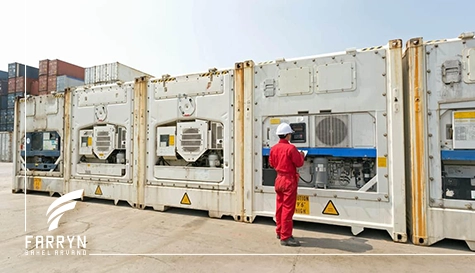
A reefer container requires refrigeration equipment, insulation, temperature-control systems, and a continuous power supply. Shipping lines and terminals must provide specialized infrastructure, including power plug points on vessels and in port yards, temperature monitoring systems, and trained operational teams to manage and service these units. As a result, both capital investment and operating costs for reefers are naturally higher than for dry containers.
In addition, reefer capacity is more limited. On many trade lanes, the number of reefer slots available on a vessel is far lower than dry capacity. During certain seasons, demand for this limited capacity rises sharply—leading to higher rates and greater sensitivity to supply–demand fluctuations.
Therefore, when an exporter receives a reefer freight quote, it should be understood not simply as a “container rate,” but as the price of accessing specialized cold-chain infrastructure.
Core Components of a Reefer Container Freight Rate
1) Ocean Freight (Base Sea Freight)
Ocean freight is the main portion of the rate charged by the carrier to move the container from the port of loading to the port of discharge. It is commonly determined by:
- Container type (20’, 40’, reefer, high cube, etc.)
- Trade lane and sea distance
- Competition and capacity on the route
- Seasonality and overall demand for reefer equipment
On routes where reefer capacity is tight and seasonal demand spikes, the base freight can rise noticeably above the annual average—particularly relevant for exporters of agricultural and food products with seasonal shipment cycles.
2) Surcharges and Reefer-Specific Add-Ons
Beyond base ocean freight, carriers typically apply various surcharges. Some are common across container types, while others are specific to reefers, such as:
- Power/energy costs for the reefer unit during the voyage and port stays
- Temperature monitoring and technical handling charges
- Route-specific costs (e.g., canal transits or high-risk areas)
Surcharge names and structures vary by carrier, route, season, and local regulations, but they are an inseparable part of the all-in rate presented to the shipper.
3) Port Charges, THC, and Inland Costs
Port handling and loading/discharge charges at origin and destination (THC—Terminal Handling Charges) apply to most containers; however, reefer units may incur different terminal costs in some ports due to specialized equipment, power plug usage, and additional yard handling requirements.
In addition, inland transport for a reefer—from the shipper’s facility to the port of loading, and from the destination port to the final delivery point—represents a significant cost component that should never be overlooked. Combined with documentation and customs-related expenses, these elements provide a more accurate picture of total logistics cost.

Key Factors Influencing Reefer Freight Rates in Export Logistics
1) Destination and Routing
One of the most decisive factors is where the shipment is going and the route it takes. Rates between regional ports can differ materially from rates to distant markets. Influencing elements include:
- Sea distance
- Number and type of transshipment points
- Competitive dynamics among carriers on that lane
- Operational risks (congestion, delays, canal restrictions, etc.)
Where multiple carriers actively compete, more competitive pricing is often achievable. On constrained lanes, carriers typically hold greater pricing power.
2) Seasonality and Supply–Demand Volatility
Export seasonality—especially for agricultural and food commodities—has a major impact on reefer rates. When exports of temperature-sensitive goods increase, demand for reefer equipment rises. If container availability is limited at the same time, rates can escalate rapidly.
Fuel costs, global ocean freight conditions, and unexpected disruptions (major canals, straits, or key routes) can also affect carrier costs and ultimately be reflected in reefer pricing. Exporters who understand seasonal patterns and market cycles can partially align shipment planning to reduce exposure.
3) Cargo Type and Temperature Requirements
Although reefer rates may appear independent of cargo type, in practice the commodity and its temperature profile can influence carrier handling and service conditions. Ultra-low temperature cargo, products highly sensitive to temperature swings, or goods subject to strict hygiene requirements may require closer oversight—potentially affecting contractual terms and certain cost elements.
Some destinations also impose specific import requirements for temperature-sensitive goods, which may increase documentation and operational costs. Trading teams and customs brokers should review these considerations prior to finalizing the transport contract.

4) Contract Terms, Incoterms, and Service Scope
Delivery terms under Incoterms (FOB, CFR, CIF, etc.) and the expected service scope significantly shape the rate structure. A port-to-port ocean move differs from an arrangement that includes inland haulage, customs clearance, or value-added services such as warehousing and insurance.
In other words, reefer pricing must always be interpreted within the defined scope of service. Two rates that look similar on paper may be fundamentally different in what they include.
Summary Table of Key Rate Drivers
| Key Factor | Practical Impact on Decision-Making |
|---|---|
| Route & destination | Distance, transshipment count, carrier competition, delay risk |
| Season & market conditions | Seasonal reefer demand, rate volatility, fuel/global market trends |
| Cargo & required temperature | Temperature sensitivity, special handling, destination health regulations |
| Reefer availability & capacity | Equipment constraints, booking lead time, carrier allocation policies |
| Incoterms & service scope | Inclusion of inland transport, customs formalities, warehousing, add-on services |
| Surcharges & ancillary charges | Energy, specialized terminal costs, route-specific charges |
Key Questions to Ask When Receiving a Reefer Freight Quote
A single headline number is not sufficient for professional decision-making. Exporters and trading teams should ask targeted questions to ensure the quote is transparent, comparable, and aligned with operational needs:
- Which exact port of loading and port of discharge does the quote cover—and does it include transshipment costs?
- Which surcharges are included, and which charges remain payable separately at origin or destination?
- What are the allowed free time terms at origin and destination, and what are the demurrage/detention conditions?
- If specialized services are required (enhanced monitoring, temperature reports, or customs coordination), are they included or charged separately?
- What is the validity period of the rate, and what adjustment policy applies in the event of sudden market changes?
Clear, written answers are essential to preventing disputes and controlling total cost.
The Role of the Transport Contract and Temperature Clauses in Pricing
In reefer shipping, clearly defining temperature parameters and responsibilities in the transport contract is central to risk management—and can influence parts of the rate structure. When a carrier commits to maintaining temperature within a defined range and to executing specific corrective actions in case of deviation, those obligations may be reflected in pricing and service terms.
A Simple Example: Two Similar Rates, Two Very Different Offers
Assume two carriers quote similar rates for a 40-foot reefer from a regional origin port to a European destination. At first glance, the difference seems minor. But a closer review reveals meaningful differences:
- Carrier A offers a route with one transshipment, provides no clear destination free time terms, and does not include temperature reporting.
- Carrier B offers a slightly longer route but with a more consistent sailing schedule, clearly defined destination free time, and optional access to temperature reports if needed.

How Trading, Customs, and Clearance Teams Help Control Reefer Logistics Cost
Trading departments, customs brokers, and logistics teams play a crucial role in managing and interpreting reefer freight rates because they engage directly with shipment files, carrier practices, port charge structures, and common operational bottlenecks.
A Strategic View of Reefer Rates—Not Just a Number
Reefer freight rates are not the simple sum of a few charges. They are the product of interlinked technical, operational, market, infrastructure, and contractual factors. A professional approach is to understand the components, document clarifications in writing, and select services based on risk, reliability, and total landed cost—not price alone.
For Reefer Container Booking, Farryn Is the Preferred Choice
Farryn Shipping, recognized as one of the largest and most reputable operators in the refrigerated container ocean freight segment, has built a strong position among maritime logistics providers by leveraging an extensive transport network, cooperation with international carriers, and hands-on experience in handling temperature-sensitive cargo. Through specialized reefer services, precise cold-chain management, and professional support across export routes, Farryn has earned the trust of exporters in the food, agricultural, and pharmaceutical sectors and has become a reliable option for reefer ocean transport in the market.