
Pharmaceutical Trade with Iran: Handling, Logistics, Temperature Control, and Documentation
A Comprehensive Operational Guide for Manufacturers, Traders, and Logistics Professionals
Why Pharmaceutical Trade is the Most Critical Segment of Global Commerce
Unlike conventional industrial or agricultural goods, pharmaceuticals are inherently linked to human health. Any compromise in quality, deviation from temperature requirements, or error in documentation and traceability can result in more than just commercial loss—it jeopardizes the integrity of healthcare systems and regulatory trust. Consequently, pharmaceutical trade is one of the most complex and strictly regulated sectors in international commerce.
In recent years, by leveraging the capabilities of domestic manufacturers, Iran has successfully established a market presence for various generics, biosimilars, and advanced therapeutic products. However, entering and sustaining a presence in these markets requires more than just high-quality products; it demands absolute mastery over pharmaceutical handling, cold chain integrity, packaging standards, and compliance with the regulatory requirements of both international health authorities and destination countries.
Categorizing Pharmaceuticals by Handling and Temperature Requirements
To understand the logistics of pharmaceutical trade, one must first recognize that not all medications are handled equally. From a logistics perspective, pharmaceutical products are categorized into several critical tiers:
- Ambient Temperature Products: Stable at room temperature.
- Refrigerated Products: Required range of 2°C to 8°C.
- Frozen/Cryogenic Products: Required temperatures below 0°C.
- Ultra-Sensitive Biologicals: Specialized vaccines and biologics requiring specific stability protocols.
Each category demands distinct handling, packaging, and refrigeration equipment. A failure to correctly classify the product or align the logistics chain accordingly can negate all efforts invested in manufacturing and regulatory registration.
The Pharmaceutical Supply Chain: From Factory to Gateway
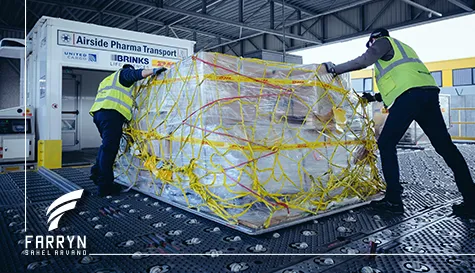
The pharmaceutical trade lifecycle begins at the manufacturing or packaging site. At this juncture, strict adherence to Good Manufacturing Practices (GMP) and Good Distribution Practices (GDP) is essential not only for production but for the credibility of the trade process.
Following production, pharmaceuticals are stored in climate-controlled facilities where temperature and humidity are meticulously documented. Once a trade order is initiated, products must be selected, prepped, and packed according to internal protocols and destination-specific requirements.
From this point, the movement toward air or sea terminals, customs clearance, handover to international carriers, and final loading must operate within a seamless cold chain framework. Precise coordination between trade units, warehouse management, Quality Assurance (QA), customs brokers, and logistics partners is critical; any avoidable delay exerts unnecessary stress on the cold chain integrity.
Modes of Pharmaceutical Transport: Air, Sea, and Multimodal
Air Freight: The Preeminent Choice
In most instances, air freight is the preferred mode for pharmaceutical trade. Its primary advantages—speed, reduced exposure to thermal risks, and access to dedicated “Pharma” services—make it the standard. Shipments are typically secured in thermal packaging with dry ice or cooling packs, often stored in climate-controlled cabins or cargo holds.
Sea Freight: Refrigerated Container Solutions
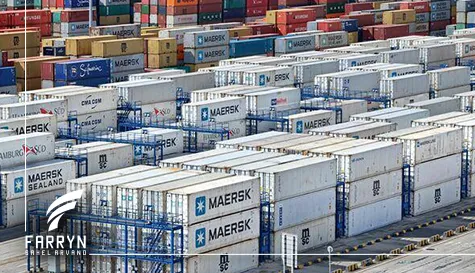
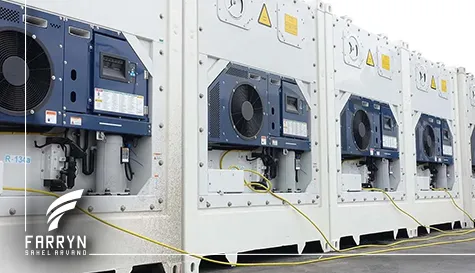
For specific routes, more stable products, or large-volume shipments, refrigerated containers (reefers) can be cost-effective. Temperature is maintained and logged throughout the transit via monitoring units. This option is suitable for products with high thermal stability where extended lead times are acceptable.
Ground and Multimodal Transport
For regional trade with neighboring countries, ground transport (reefer trucks and vans) is vital. In some chains, multimodal transport (e.g., ground to an international hub, followed by air) is utilized. The guiding principle remains constant: the temperature must stay within the specified range, and verifiable data—such as logs from data loggers—must be provided upon request.
Temperature Standards: Maintaining Chain Integrity
While specific temperature and humidity requirements are mandated by the product’s official labeling and quality specifications, standard ranges include:
- Ambient: 15°C to 25°C.
- Refrigerated: 2°C to 8°C.
- Frozen: Below 0°C (e.g., -20°C or -80°C, depending on the product).
The primary challenge in pharmaceutical trade is preventing “Temperature Excursions.” Any deviation, even for short durations, must be documented, evaluated, and reported to the buyer and regulatory bodies. Consequently, the use of calibrated data loggers in every shipment has become the industry standard.
Table: Simplified Pharmaceutical Temperature Tiers
| Temperature Category | Typical Range | Standard Carrier | Typical Application |
|---|---|---|---|
| Ambient | 15°C – 25°C | Air/Ground (Limited control) | Stable tablets & coated pills |
| Cold Chain | 2°C – 8°C | Air, Reefer trucks/vans | Antibodies, hormones, solutions |
| Frozen | < 0°C (to -20°C or lower) | Specialized freezers/reefers | Biological products & vaccines |
Note: This classification is general; all operations must comply with individual product labeling.
Packaging: Protection, Stability, and Traceability
Packaging in pharmaceutical trade serves three core functions: physical protection, climate control, and identification/traceability. Beyond primary packaging (blisters, vials, ampoules), secondary and tertiary packaging—such as insulated cartons, thermal boxes, and pallet shields—is essential.
For temperature-sensitive shipments, designing the right thermal profile for the duration of the journey is critical. Furthermore, regulatory information such as batch numbers, expiration dates, product names, dosage, country of origin, and 2D barcodes must be clearly marked on final packaging. Compliance with destination-specific labeling, anti-tampering (Tamper-Evident) features, and local language requirements is mandatory.
Required Documentation for Pharmaceutical Trade
Pharmaceutical trade is impossible without rigorous, compliant documentation. These documents are generally categorized as follows:
- Commercial and Customs Documents: Commercial Invoice, Packing List, Sales Contract/Proforma, and Customs Declaration. Accuracy in matching product descriptions (scientific and trade names, dosage, quantity) is paramount to prevent border delays.
- Pharmaceutical and Health Certificates: Documents such as Free Sale Certificates (FSC), Certificates of Pharmaceutical Product (CPP), and manufacturing licenses. These verify that the product is manufactured under official regulatory oversight.
- Quality and Compliance Documents: The Certificate of Analysis (CoA) is non-negotiable for every batch. Additionally, evidence of GMP/GDP compliance and, where necessary, stability study reports or risk assessments may be required by the buyer.
- Transport and Temperature Logs: Beyond standard bills of lading, documented proof of temperature stability from warehouse to delivery (Temperature Logs) is a critical contractual obligation.
The Role of Specialized Logistics Partners
Selecting a logistics provider is not merely a pricing decision; it is a strategic partnership in Cold Chain Management and GDP compliance. Your partner must possess proven experience, dedicated climate-controlled infrastructure, and a robust network of international partners.
A critical competency is the ability to manage “Last Mile” logistics in the destination country, particularly when delivering to hospitals or specialized distribution centers. Coordination, precise scheduling, and customs expertise at the destination are vital in mitigating time and temperature risks.
Preventing Common Trade Failures
In practice, errors in pharmaceutical trade can have severe consequences. Common pitfalls include:
- Inappropriate transport mode selection regarding product sensitivity.
- Neglecting destination-specific regulatory or labeling requirements.
- Inadequate thermal packaging or poor thermal profile design.
- Failure to maintain verifiable temperature records.
- Lack of synchronization between production, QA, trade, and customs units.
Pharmaceutical Trade as a Fusion of Expertise, Compliance, and Logistics
Pharmaceutical trade with Iran presents a significant opportunity to showcase industrial excellence. However, sustainable success rests on three pillars: technical expertise in manufacturing and quality control, strict adherence to health regulations, and the precise design of the transport/temperature chain.
For manufacturers, viewing trade as an end-to-end process—from factory to end-user—is essential. For trade and customs departments, mastering the intricacies of documentation and international standards is a professional differentiator. Every shipment is not just a commercial transaction; it is a representation of production standards, logistical discipline, and the commitment to global health.
Secure Pharmaceutical Trade with Farryn Sahel
In the sensitive realm of maritime pharmaceutical transport, choosing a partner thoroughly versed in Cold Chain requirements and GDP standards is vital. Farryn Sahel is recognized as a leader in pharmaceutical logistics.
With extensive experience in handling pharmaceutical shipments, access to standardized refrigerated containers, 24/7 temperature monitoring systems, and a vast network of specialized international logistics partners, Farryn Sahel has established a reputation for reliability. By prioritizing cold chain integrity and providing professional management of documentation and transit processes, Farryn Sahel is the trusted partner for manufacturers and traders seeking safe, sustainable, and compliant pharmaceutical distribution.