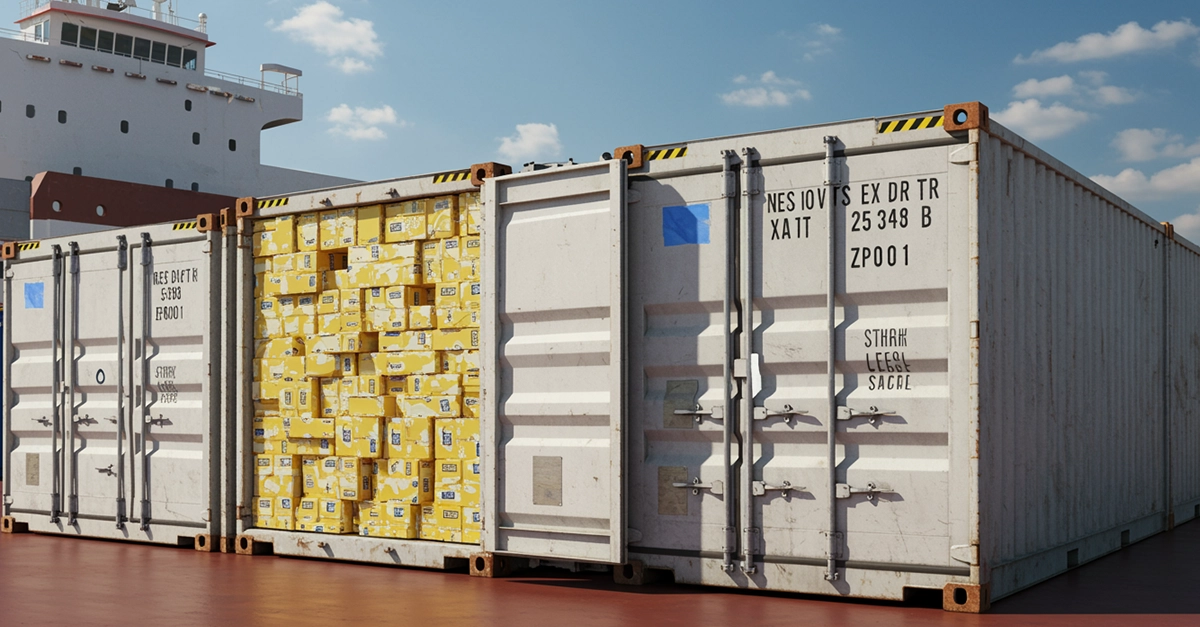
Butter Export
Butter is considered one of the fundamental products of the dairy industry and plays a significant role in global agricultural trade. In recent years, demand for pasteurized butter has increased substantially worldwide, with exports reaching approximately USD 10.3 billion in 2024. Many countries rely on butter imports due to high consumption levels and its extensive applications in the food industry, particularly in confectionery and culinary processing.
In Iran’s neighboring countries—many of which experience warm climates or structural limitations in domestic dairy production—there is considerable dependence on imports of high‑quality butter. For this reason, butter exports represent a valuable opportunity for the expansion of Iran’s non‑oil trade and the strengthening of its presence in regional and global markets.
This article provides an analytical and market‑oriented overview of butter exports, examining key importing markets, cold‑chain transportation requirements, logistical challenges, administrative barriers, and the potential opportunities available to Iran in this sector.
Major Importing Countries of Pasteurized Butter
The global butter market is strongly influenced by several key countries that either maintain high domestic consumption or function as distribution and re‑export hubs. European countries are at the forefront of this market. For example, France imports more than 200,000 tons of butter annually, accounting for nearly 15% of global imports. Following France, the Netherlands and Germany also represent significant market participants. In Europe, a large portion of these imports is utilized by food processing industries or redistributed to other markets.
China, as Asia’s most populous country, has emerged as a major butter importer and is projected to import over 100,000 tons in 2024. The United States, despite its substantial domestic production, imports several thousand tons of butter annually, particularly specialty European varieties.
In the Middle East, countries across the Persian Gulf and West Asia represent important butter import markets. For example, Saudi Arabia imports tens of thousands of tons of butter each year to support both domestic consumption and industrial food production. Similarly, countries such as Iraq, the United Arab Emirates, and Pakistan rely heavily on imports to meet their butter demand due to rising consumption and limited domestic production capacity.
These import markets primarily prioritize product quality and competitive pricing, prompting intense competition among international suppliers seeking to secure greater market share.
Transportation and Storage Requirements in Pasteurized Butter Exports
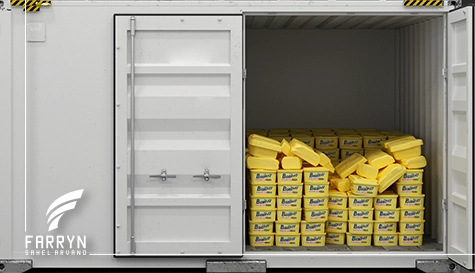
Butter is classified as a temperature‑sensitive commodity, and maintaining an uninterrupted cold chain throughout all stages of transportation and storage is essential to preserve quality and shelf life. For maritime transport, standard reefer containers represent the most appropriate solution.
Before loading, the container temperature must be pre‑conditioned to the required range in order to prevent thermal shock. Depending on transit duration and logistics requirements, butter can be transported using two primary temperature regimes:
• Frozen transport
• Chilled transport
For long‑distance transportation or extended storage, frozen transport at approximately −18°C is recommended, allowing butter to be preserved for 8 to 12 months.
For shorter transit routes or rapid distribution requirements, chilled transport at 0–4°C may be used, which typically preserves butter quality for 1 to 2 months.
Temperature stability during transit is a critical factor. Temperature fluctuations or power interruptions within the container may lead to condensation on butter packaging, potentially resulting in mold growth and product spoilage. For this reason, reefer containers equipped with temperature monitoring and alarm systems are essential for maintaining transport integrity.
Packaging also plays a crucial role in maintaining butter quality. Export‑grade butter is commonly packed in 20‑ or 25‑kilogram blocks, placed in multi‑layer cartons with internal linings such as polyethylene or waxed paper. Packaging must be securely sealed to prevent air and moisture ingress, thereby minimizing oxidation and deterioration of butter fats.
Butter is also odor‑absorbent, meaning it can absorb surrounding odors from products such as fish, spices, or fuels. Consequently, careful container stowage planning is required to ensure butter is not loaded alongside strongly scented cargo. Additionally, the container environment must be clean and odor‑free.
Adhering to these transportation and storage standards ensures that butter remains fresh and retains its original quality from the moment it leaves the production facility until delivery to the buyer.
Logistical Challenges Before and After Transport of Pasteurized Butter
The butter export process involves numerous logistical challenges that exporters must anticipate and address in advance.
Challenges Before the Shipment Reaches the Port
The first step involves timely sourcing and consolidation of butter shipments with consistent quality from production facilities. Any delays in collection or discrepancies in warehouse temperature conditions can result in deterioration of product quality.
Coordination between cold storage facilities, packaging units, and customs clearance processes is equally essential. For instance, if packaged butter remains waiting for export authorization, temperature increases may occur, potentially damaging the product.
Another challenge involves the limited availability of refrigerated trucks within the national transportation fleet. Long inland routes—such as those connecting central or northern regions of Iran to southern seaports—require reliable refrigerated transport. Limited availability or high transport costs can create operational constraints.
Accurate planning for truck reservations and departure scheduling is therefore critical to minimize unnecessary delays. Additionally, obtaining veterinary certificates and export permits before shipment departure is essential, as any documentation deficiencies may delay shipment dispatch—a particularly critical issue for perishable products such as butter.
Challenges at Destination and During Customs Clearance
Once the shipment arrives at the destination port, the customs clearance and distribution phase begins, often representing the most sensitive stage.
In certain countries, imported food products are subject to complex bureaucratic clearance procedures, including laboratory testing, approvals from public health authorities, or verification of compliance with local packaging regulations.
Extended customs procedures increase the likelihood that the container will remain at the port for extended periods. Reefer containers must remain connected to power sources during this time to maintain temperature control, yet not all ports possess adequate reefer infrastructure.
Close coordination with the local agent or importer is therefore necessary to accelerate clearance procedures and ensure appropriate infrastructure is available. Furthermore, commercial documentation must fully comply with destination customs requirements. Even minor discrepancies in documents such as the commercial invoice or certificate of origin may lead to clearance delays.
Each country maintains specific regulations governing dairy imports. For example, authorities may require health certificates or halal certification for imported dairy products. Exporters must therefore understand these regulatory requirements before shipment and prepare all necessary documentation accordingly.
Overall, logistical challenges in butter exports revolve primarily around timing and regulatory compliance. The faster the clearance process and the more accurate the documentation, the lower the risk of product spoilage and additional operational costs.
Export Bureaucracy and Customs Procedures
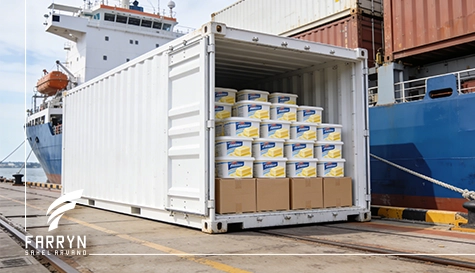
Exporting food products—particularly animal‑derived products such as butter—requires compliance with multiple administrative procedures and regulatory approvals in both the origin and destination countries.
In Iran, prior to customs clearance, exporters must obtain a veterinary health certificate for the butter shipment. The Iran Veterinary Organization issues this certificate after reviewing production documentation, including verification of raw milk quality and butter manufacturing processes.
Additionally, exporters may be required to obtain certification from the Institute of Standards and Industrial Research of Iran confirming compliance with national standards such as Standard No. 1554 for butter.
Export registration in official systems such as the Comprehensive Trade System and obtaining the required tracking codes are also mandatory administrative procedures.
Once the cargo is prepared and packaged according to regulations, the exporter must submit an export customs declaration containing shipment details including net weight, gross weight, cargo value, and HS Code 040510.
Following verification of the declaration and supporting documents—including the commercial invoice and certificate of origin—Iranian customs authorities authorize loading and export release. Any discrepancies in documentation or incomplete records may delay issuance of the export permit, emphasizing the importance of precise documentation management.
At the destination side, clearance procedures must comply with the import regulations of the receiving country. Importing companies typically must obtain import authorization from institutions such as the Ministry of Agriculture or the national Food and Drug Authority prior to cargo arrival.
Some countries maintain pre‑registration systems for dairy imports, requiring Iranian exporters to register in advance and obtain approval before shipment.
Upon arrival at destination customs, the Iranian veterinary health certificate must be validated by the local health authorities. Authorities may also conduct sampling and laboratory testing to verify the product’s safety and composition.
Product labeling must also comply with the destination country’s language and regulatory standards. For example, labels must include ingredients, production date, expiration date, and storage conditions in the local language.
Payment of customs duties and import taxes represents the final stage of the clearance process. Neighboring countries may offer preferential tariffs or customs exemptions for Iranian butter under bilateral trade agreements, provided that a valid certificate of origin is submitted.
Overall, simplifying export and clearance procedures for butter shipments requires comprehensive documentation preparation and close cooperation with experienced international logistics providers. Experience shows that working with specialized export logistics companies significantly facilitates administrative procedures—from permit acquisition to customs clearance.
Growth Opportunities for Iran’s Pasteurized Butter Exports
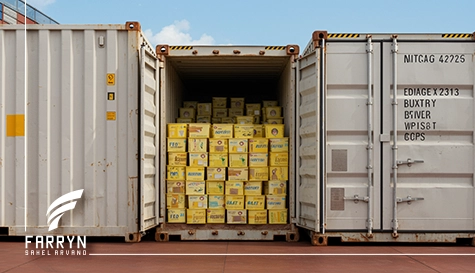
In recent years, Iran has transitioned from being a butter importer to becoming one of the region’s emerging exporters of this product. With annual production capacity exceeding 9 million tons of raw milk and significant investment in modern dairy processing facilities, Iran has achieved self‑sufficiency in domestic butter supply and generated surplus production for export.
According to international statistics, Iran is projected to export approximately 33,000 tons of butter in 2024, placing the country fifth among the world’s largest butter exporters, after New Zealand, the European Union, Belarus, and the United States.
This trend demonstrates rapid growth in Iran’s butter export sector. Forecasts suggest that exports could reach nearly 60,000 tons by 2025, representing an increase of approximately 80%.
One of the primary factors behind the competitiveness of Iranian pasteurized butter in global markets is its favorable pricing. Currency depreciation in recent years has enabled Iranian dairy products to enter regional markets at prices significantly lower than those of European competitors.
In certain neighboring markets, Iranian butter can be up to 30% cheaper than European brands, while improvements in product quality—through compliance with international hygiene and packaging standards—have attracted new buyers.
Iran’s traditional export markets are primarily neighboring countries. Approximately 80% of Iran’s dairy exports are directed to Iraq, Pakistan, and Afghanistan, with butter forming a key component of this trade.
Countries in the Persian Gulf region, including Oman, Qatar, and the United Arab Emirates, also represent promising future markets due to geographic and demographic factors that necessitate butter imports.
Significant developments are also occurring in Central Asia. For example, Kazakhstan, which has limited domestic dairy production, has increasingly relied on butter imports. Iran has successfully captured a substantial share of this market through land transport routes and preferential tariffs under the Eurasian Economic Union.
Reports indicate that Iran is now Kazakhstan’s largest butter supplier, accounting for approximately 40% of the country’s import demand. Similar opportunities may arise in countries such as Uzbekistan and Azerbaijan, where governments seek to reduce dependence on imports from Europe or New Zealand and benefit from Iran’s cost advantages and geographic proximity.
Global market conditions have also favored emerging exporters. The European Union has faced challenges maintaining export volumes due to high production costs and strict environmental regulations, while New Zealand and Australia have experienced supply fluctuations caused by drought and production variability.
As a result, new exporting countries such as India and Iran have attracted increasing attention from international buyers. India reportedly tripled its butter exports last year, while Iran nearly doubled its export volume. Continued expansion along this trajectory could significantly strengthen Iran’s position in the global butter market.
To fully capitalize on these opportunities, Iranian producers and exporters must maintain consistent product quality, reliable supply capacity, and strict compliance with destination market requirements, including food safety standards and delivery schedules.
Government support—through export incentives and trade diplomacy aimed at opening new markets—has also increased, further facilitating the participation of Iranian companies in global butter trade.
Why Is It Essential to Use Specialized Refrigerated Transport Companies?
Butter exports present a valuable opportunity for Iran at both regional and global levels—opportunities that can strengthen non‑oil export revenues, support the livestock sector, and enhance the international visibility of Iranian dairy brands.
However, success in this field is not accidental. It requires careful planning, strict compliance with temperature‑controlled transport standards, and intelligent supply chain management.
Exporters should avoid relying on traditional methods or unverified intermediary promises and instead work with specialized logistics companies that possess genuine expertise and infrastructure for refrigerated transport.
In this regard, Farryn Sahel Arvand, with extensive experience in reefer cargo transportation and professional cold chain management, can serve as a reliable partner for butter exports. From the initial preparation stages to final delivery, the company offers a comprehensive range of modern logistics solutions, including:
Documented and guaranteed transport capacity
Farryn Sahel Arvand maintains direct relationships with major shipping lines and provides access to various reefer container types, ensuring confirmed shipping capacity.
Fast and transparent booking procedures
Container reservations and shipment scheduling are handled efficiently and transparently, enabling shipments to reach their destination without unnecessary delays.
Real‑time shipment monitoring
Online monitoring of container temperature and location is available from loading until final delivery, providing exporters with full operational visibility.
Consultation and packaging support at origin
Farryn’s expert team provides guidance on packaging optimization, pallet configuration, customs procedures, and export documentation. Standardized packaging services are also available when required.
24/7 operational support until delivery
Company specialists remain available around the clock to respond to inquiries and manage shipment progress—from departure at the exporter’s warehouse to clearance at the destination port.
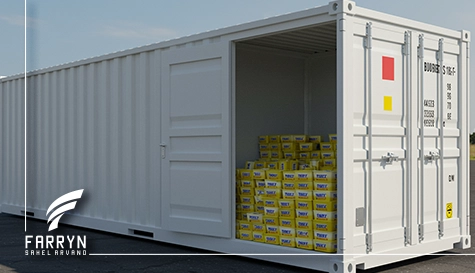
Successful Butter Exports Start Here
Butter is a high‑value and temperature‑sensitive commodity, requiring a specialized export approach. The more carefully exporters manage cold chain details, regulatory compliance, and market requirements, the greater their chances of achieving sustainable profitability in this trade.
Before initiating butter export operations, it is advisable to proceed with structured planning and consultation with industry specialists.
Farryn Sahel Arvand, with extensive experience in international logistics and container shipping, is ready to assist exporters in identifying and developing new butter markets. If you are seeking secure and reliable transportation for butter shipments worldwide, contact us today.
Our team provides specialized consultation, reefer container booking services, and competitive freight rates to support your export operations.
With Farryn, no destination is out of reach.