Pistachio Exports from Iran
A Comprehensive Guide for Exporters Entering the Global Market
Pistachios are among the most recognized agricultural products of Iran in international trade and are closely associated with the country’s national brand. Iran’s long-standing history in pistachio cultivation, its unrivaled quality, and the wide diversity of varieties have positioned Iranian pistachio exports as one of the most significant sources of foreign exchange within the agricultural sector.
Despite this prominent position, pistachio exports are a highly specialized process. Global markets impose strict standards regarding product quality, food safety, packaging, moisture levels, aflatoxin limits, and transportation methods. Professional exporters understand that sustainable profitability can only be achieved when the entire preparation and shipment chain is managed with precision.
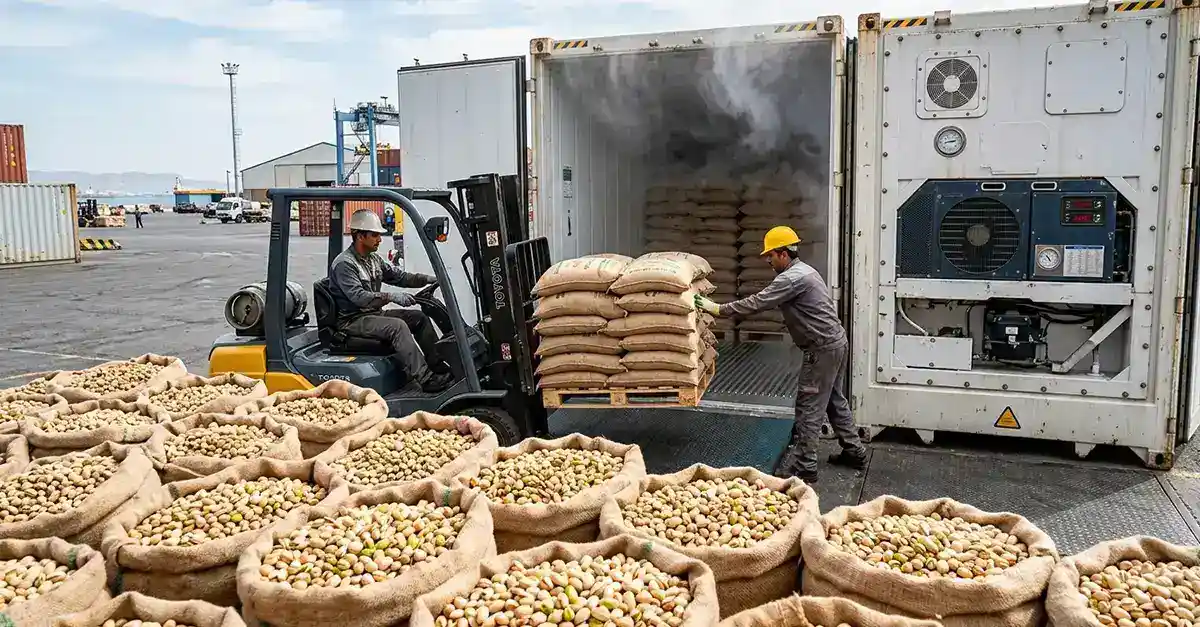
In recent years, stricter regulatory requirements in the European Union and premium markets such as China and the Gulf states have significantly increased the importance of logistics management and the selection of appropriate shipping methods. Many companies have successfully preserved product quality over long transit routes by using refrigerated containers and controlled temperature conditions, preventing damage, fungal growth, and deterioration of the pistachio’s physical characteristics.
This article presents a comprehensive, practical, and operational analysis designed to help Iranian exporters navigate pistachio exports with greater clarity, efficiency, and compliance.
Iran’s Position in the Global Pistachio Market
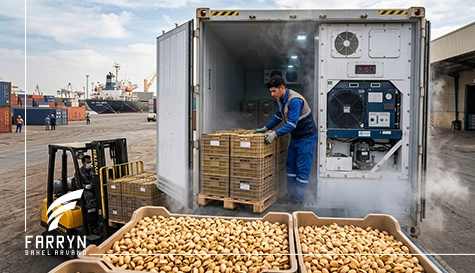
Iran and the United States represent the two principal global hubs for pistachio production and export. Although their respective shares of the global market fluctuate depending on annual harvest volumes, Iranian pistachios remain the preferred choice for many professional buyers due to their distinctive flavor, high percentage of naturally split shells, and superior oil quality.
Importing countries typically choose between Iranian and American pistachios based on end-use requirements, domestic regulatory standards, and price considerations. Iranian pistachios are widely recognized for their flavor and sensory quality, while American pistachios are often associated with consistent industrial production and standardized packaging.
This long-established position has enabled Iranian exporters to maintain multi‑decade trading relationships with importers in many markets. However, these same markets—particularly in Europe and East Asia—now demand significantly stricter compliance with quality and safety standards. Failure to meet these requirements may result in shipment rejections or temporary suspension of exports to the destination market.
Types of Export‑Grade Iranian Pistachios and Their Characteristics
Iranian pistachios are classified into several varieties based on shape, size, and shell split ratio, each targeting different export markets. The most recognized varieties include Fandoghi, Kaleh‑Ghouchi, Ahmad Aghaei, and Akbari.
Fandoghi pistachios are commonly used for processing and industrial applications.
Kaleh‑Ghouchi pistachios, known for their large size and appealing appearance, are particularly popular in Middle Eastern markets.
Ahmad Aghaei pistachios, distinguished by their elongated shape and bright shell color, are well suited for premium markets such as Europe and Japan.
Akbari pistachios, one of the most premium varieties in terms of visual quality, are widely consumed in the UAE, Qatar, Kuwait, and China.
Selecting the appropriate pistachio variety for each target market is one of the first critical steps toward successful exports. Each market has specific preferences, and exporters must align product selection with importer demand and consumption patterns.
Quality and Food Safety Standards in Pistachio Exports
One of the most significant challenges in pistachio exports is compliance with the strict regulatory standards imposed by destination markets.
Requirements such as maximum permissible aflatoxin levels, product uniformity, visual integrity, optimal moisture content, and absence of physical contamination play a decisive role in product acceptance.
The European market applies the strictest aflatoxin regulations. Exporters targeting this market typically must obtain aflatoxin certification from accredited laboratories before shipment.
Markets such as China, India, and the Middle East also maintain defined quality standards, although their primary focus is often on kernel size, bright shell color, and a high percentage of naturally split pistachios.
Strict compliance with these standards enables exporters to maintain consistent market access while minimizing the risk of cargo rejection or damage to commercial reputation.
Export Pistachio Packaging and Its Importance in Attracting Target Markets
Packaging plays a dual role in pistachio exports: product protection and market positioning.
Professional buyers of Iranian pistachios typically expect shipments to be delivered in standardized, moisture‑resistant packaging with clearly printed product information.
Common export packaging sizes include 10 kg, 25 kg, and 50 kg cartons or bags, while premium markets increasingly demand smaller consumer‑ready and luxury packaging formats.
The use of laminated moisture‑resistant bags can significantly reduce the risk of product deterioration during transit, particularly in fluctuating temperature environments.
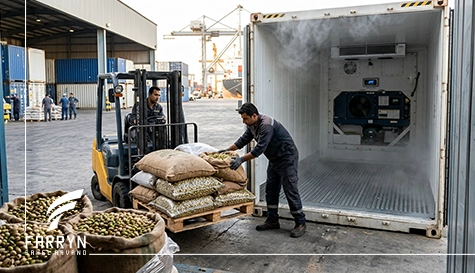
In maritime transport, packaging becomes even more critical. During long voyages, packaging that lacks sufficient breathability or moisture resistance can lead to deterioration in product quality.
Product Preparation Process Prior to Export
Export‑grade pistachios must undergo several essential stages before shipment. These include:
- Processing
- Sorting and grading
- Moisture control
- Laboratory testing and certification
- Packaging
- Palletization
Moisture content is one of the most sensitive parameters. Excess moisture can create favorable conditions for fungal growth and aflatoxin development.
Export pistachios must therefore be dry, uniform, and free from visible contamination, while appropriate temperature control should be maintained throughout the handling process.
The presence of closed shells, damaged kernels, or discolored pistachios in export consignments not only reduces the final sale price but may also result in cargo rejection at destination customs.
Advanced color‑sorting and laser grading equipment, combined with manual inspection, represent the most reliable methods for ensuring consistent cargo quality.
Target Markets for Iranian Pistachio Exports
Each export market has distinct characteristics, and exporters must understand the consumption patterns, import regulations, purchasing power, and seasonal demand cycles of their target destinations.
Gulf Cooperation Council (GCC) Countries
Countries such as the UAE, Qatar, Kuwait, and Oman are among the largest importers of Iranian pistachios.
These markets typically prefer stable supply relationships, and premium varieties such as Akbari and Ahmad Aghaei enjoy strong demand.
In these markets, product appearance, luxury packaging, and large kernel size often carry greater importance than price.
China and East Asia
China is one of the largest pistachio consumers in the world.
Pistachios with large kernel sizes and bright shell coloration tend to perform particularly well in this market.
Demand in China often rises significantly during national holidays and festive seasons, requiring exporters to carefully align shipment schedules with these consumption peaks.
European Union
The European Union enforces the strictest aflatoxin regulations for pistachio imports.
Accessing this market requires rigorous laboratory testing and collaboration with reputable suppliers.
However, the European market typically offers higher purchasing prices compared with many other regions.
The Role of Professional Logistics in Pistachio Exports
One of the most sensitive stages in pistachio exports is transportation.
Unlike certain dry commodities that are relatively resistant to environmental conditions, pistachios are considered semi‑sensitive cargo in terms of humidity and temperature exposure.
Severe temperature fluctuations or high humidity can result in quality deterioration, discoloration, mold formation, and increased aflatoxin levels.
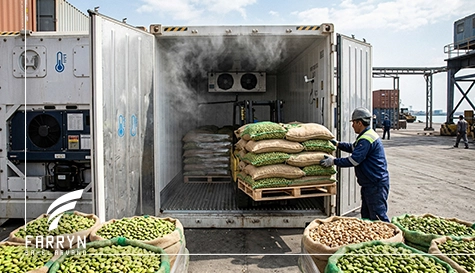
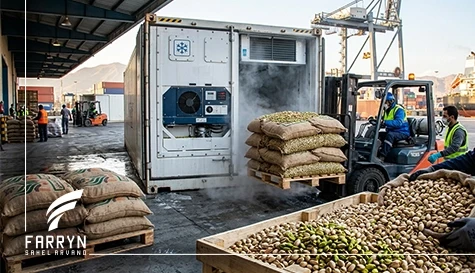
For this reason, many professional exporters utilize refrigerated containers (reefer containers) on long‑distance routes to maintain full control over temperature and humidity conditions.
The Importance of Shipping Pistachios in Refrigerated Containers
During ocean transport, cargo remains in transit for extended periods and may encounter high humidity, condensation, and temperature fluctuations.
The use of Reefer Containers effectively mitigates these risks. These containers are equipped with integrated temperature‑control systems that prevent the cargo environment from being affected by external climatic conditions.
The main advantages of transporting pistachios in reefer containers include:
- Preventing moisture increase, the primary driver of fungal growth and aflatoxin formation
- Preserving the natural flavor and oil composition of pistachios
- Maintaining temperature stability and preventing internal container condensation
- Protecting product appearance and quality until final delivery
- Extending shelf life and enhancing appeal for premium buyers
Specialized maritime logistics providers, experienced in precise temperature calibration (typically between 5°C and 10°C), can assist exporters in delivering pistachio shipments to markets such as China, India, Europe, and ASEAN without compromising product quality.
Risk Management in Pistachio Exports
Pistachio exports involve multiple risks, ranging from global price fluctuations and regulatory changes to food safety requirements, transportation challenges, and currency volatility.
Successful exporters are those who identify these risks and develop proactive strategies to manage them.
The use of standardized containers, strict quality management protocols, continuous market analysis, and cooperation with reliable shipping companies can significantly mitigate many of these risks.
Optimal Timing for Pistachio Exports
The pistachio harvest season in Iran typically occurs during September and October, although exports continue throughout the year.
In the months immediately following harvest, markets often prefer fresh pistachios with low moisture levels. In the second half of the year, processed and packaged pistachios tend to experience stronger demand.
Certain markets, particularly China, display strong seasonal consumption patterns. Exporters must therefore carefully align shipment schedules with these demand cycles.
Specialized Pistachio Transport to Premium Global Markets — The Advantage Provided by Farryn
Pistachio exports from Iran represent a sustainable, profitable, and globally recognized trade, yet success in this sector requires professional management across every stage of the export chain.
From variety selection and sorting to quality control, laboratory certification, packaging, and professional transportation, each operational detail plays a critical role in the final outcome of a shipment.
For long‑distance routes and premium markets, the use of refrigerated containers enables exporters to preserve product quality and minimize the risks of aflatoxin development or cargo deterioration.
Partnering with specialized maritime logistics companies helps ensure commercial security, cargo integrity, and long‑term buyer satisfaction.
With years of experience, specialized infrastructure, and a team capable of managing the export process from farm to destination, Farryn is prepared to safeguard the quality of your shipment, the security of transportation, and the success of your international trade operations.
Contact Farryn today and take the first step toward professional and reliable pistachio exports.