Importing Potatoes from Iran: A Comprehensive, Operational Guide for Professional Importers
The Strategic Value of Iranian Potato Imports
The importation of potatoes from Iran represents a highly sustainable and lucrative opportunity within the global agricultural trade. Widespread production across diverse Iranian climatic regions, staggered harvesting seasons, proximity to numerous consumer markets, and the consistent demand within neighboring countries have established Iran as a significant node in the regional supply chain. However, contrary to the expectations of inexperienced market participants, successful potato importing is not merely a straightforward transaction. It requires meticulous supply chain management, a deep understanding of destination market standards, optimal procurement timing, and hands-on mastery of international shipping, sorting, documentation, and consumer behavior.
Professional importers recognize that profitability in this trade is derived from the precision of operational management rather than mere price arbitrage. The slightest oversight in farm selection, grading protocols, or shipment scheduling can transform a profitable consignment into a financial liability. Consequently, the following sections provide a comprehensive, operational, and detail-oriented analysis based on field experience, designed to assist international importers in the decision-making, planning, and execution phases.
Key Export Markets for Iranian Potatoes
Near-Border Markets (Iraq, Afghanistan, Turkmenistan, Azerbaijan)
Near-border markets are the primary destinations for Iranian potato exports, driven by geographic proximity, reduced freight costs, rapid overland access, and constant demand. Iraq serves as the largest importer of Iranian potatoes, requiring consistent supplies throughout most of the year due to high consumption rates and gaps between local harvest cycles. Afghanistan similarly relies on Iranian imports during winter months when domestic production declines. These markets generally maintain moderate requirements regarding visual quality, with their primary focus centered on competitive pricing and product freshness. Consequently, Iranian potatoes are highly competitive in these corridors.
Persian Gulf Markets (UAE, Oman, Qatar, Kuwait)
GCC markets possess higher purchasing power and are prepared to pay a premium for high-quality produce and professional packaging. However, they impose stringent requirements concerning visual presentation, uniform sizing, standardized packaging, and full compliance with sanitary regulations. In these markets, smaller retail packs (1–10 kg) with high-quality printing and comprehensive product information are standard requirements. Importers targeting these markets must prioritize standardization, MRL (Maximum Residue Level) testing, and specialized packaging.
Distant Markets (Russia)
Russia offers a highly attractive market size, yet imports from Iran require specialized expertise. Due to high freight costs, stringent quarantine regulations, and risks of shipment rejection or destruction due to pesticide residues or quarantine pests, imports must be seasonal, thoroughly planned, and managed through professional infrastructure. The optimal import window is typically winter and early spring, correlating with the decline in Russian domestic production.
Quality Standards and Compliance Requirements
Regardless of the destination, all markets emphasize key criteria: tuber uniformity, intact skin free from abrasions, absence of blemishes, no sprouting, and freedom from specific pests. In markets such as the UAE and Qatar, these standards are enforced with even greater rigor. To mitigate the risk of rejection, professional importers ensure that valid MRL testing is conducted prior to shipment.
It is critical to note that visual standards represent only a portion of the requirements; in many markets, product integrity—specifically regarding pest infestation, fungal growth, internal decay, or storage-related diseases—is of paramount importance.
SPS Requirements and Essential Documentation
Compliance with SPS (Sanitary and Phytosanitary) requirements is mandatory for the importation of potatoes from Iran. Essential documents include phytosanitary certificates, verification of freedom from specified pests, pesticide residue analysis, and certificates of conformity with destination-country regulations.
Russia and the GCC impose the most stringent controls. While Iraq and Afghanistan operate under simpler regimes, they still enforce necessary inspections. Crucially, delays in preparing SPS documentation are a frequent cause of customs detention. Importers must ensure all documentation is finalized well before final loading.
Competitive Analysis in the Iranian Potato Market
Regional competition is a decisive factor in landed costs. Turkey is the primary competitor, benefiting from advanced packaging capabilities and modern infrastructure; however, recent droughts have created supply gaps favorable to Iranian produce. Pakistan, due to lower production costs, offers competitive pricing that exerts significant pressure in the Persian Gulf markets. The periodic presence of India and China in Central Asia can also impact regional price volatility and demand volumes. Professional importers must continuously monitor competitor behavior and align their sourcing routes based on prevailing supply conditions.
Import Behavior of Destination Markets
Iraq is a consistent year-round importer of Iranian potatoes with minimal consumption volatility. Afghanistan exhibits peak demand in winter. The UAE places a premium on visual quality, whereas Russia has the highest demand in winter and early spring.
Understanding these patterns enables importers to not only select optimal procurement windows but also to align packaging requirements, sorting specifications, and product grade expectations with their respective target markets.
Selecting the Right Product: The Foundation of Success
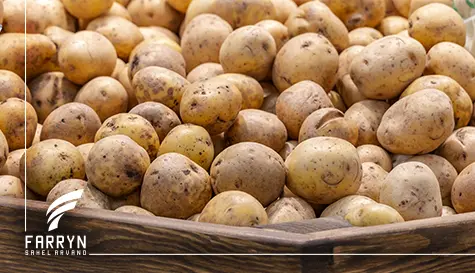
Product selection is one of the most sensitive operational stages. Export-grade potatoes from Iran must demonstrate uniform sizing, intact skin, and freedom from disease symptoms. Tubers harvested prematurely often have thin skins, making them vulnerable to mechanical damage during transit. Many professional importers prefer to source from farms with a documented history of export production, as these suppliers offer more consistent quality profiles.
Sorting and Preparation: Where Profitability Is Determined
Every shipment of potatoes must undergo a rigorous sorting (grading) process before loading. At this stage, produce is categorized by size and physical quality. The presence of a small percentage of defective product can lead to significant price devaluation or full shipment rejection at the destination.
In certain markets, unwashed potatoes are preferred to prevent spoilage from excess moisture. Conversely, in GCC countries, washed potatoes paired with high-end retail packaging are often viewed as a positive differentiator.
Cost Structure and Profitability
Import costs include product procurement, sorting, packaging, inland transport, customs duties, and international freight. For short-haul routes, domestic and cross-border transport represent a smaller share of the cost; however, for markets like Russia, international freight constitutes a major proportion of the landed cost.
Typically, profit margins on Iranian potato imports depend on three factors: cargo quality, supply conditions in the destination country, and freight costs. When competitor countries enter the market, margins compress, necessitating enhanced competitiveness from the importer.
Optimal Procurement Seasons
Russia is a significant buyer during winter and early spring. GCC countries exhibit peak demand from autumn through spring. Central Asian markets require imports during winter, and Iraq remains a steady client throughout the year due to high consumption levels.
Importers who align their procurement schedules with regional production cycles and market price dynamics generally achieve higher profitability.
Logistics and Transport Challenges
Deficiencies in cold chain infrastructure, prolonged border congestion, high freight rates to Russia, limited availability of reefer containers, and complexities in insurance and fund transfers represent significant challenges for importing Iranian potatoes.
In Persian Gulf markets, maritime transport from Bandar Abbas is typically more stable and lower-risk than land routes. Conversely, road transport is faster and more cost-effective for shipments to Iraq and Afghanistan.
Packaging Requirements for Various Markets
The choice of packaging has a direct impact on sales performance.
- Iraq: Typically accepts standard 25-kg bags.
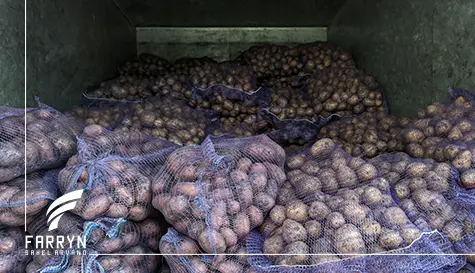
- Russia: Requires mesh, moisture-resistant bags.
- UAE, Qatar, and Oman: Prefer small, aesthetically appealing retail packs with comprehensive product information.
From Farm to Border with Farryn
Importing potatoes from Iran is a promising and profitable venture, but success requires a profound understanding of standards, markets, consumer behavior, logistical challenges, and optimal procurement cycles. Successful importers are those who manage product selection, preparation, transport, and scheduling with precision and comprehensive planning.
For importers seeking to enter the Iranian potato market with greater confidence or scale their existing operations, Farryn Sahel Arvand serves as a professional and reliable partner.
With extensive experience in agricultural supply chains, export preparation, standardized packaging, documentation management, and logistics coordination, this organization simplifies and secures your supply chain.
To receive specialized consultation, market analysis, and operational support, you may contact the Farryn Sahel Arvand team.