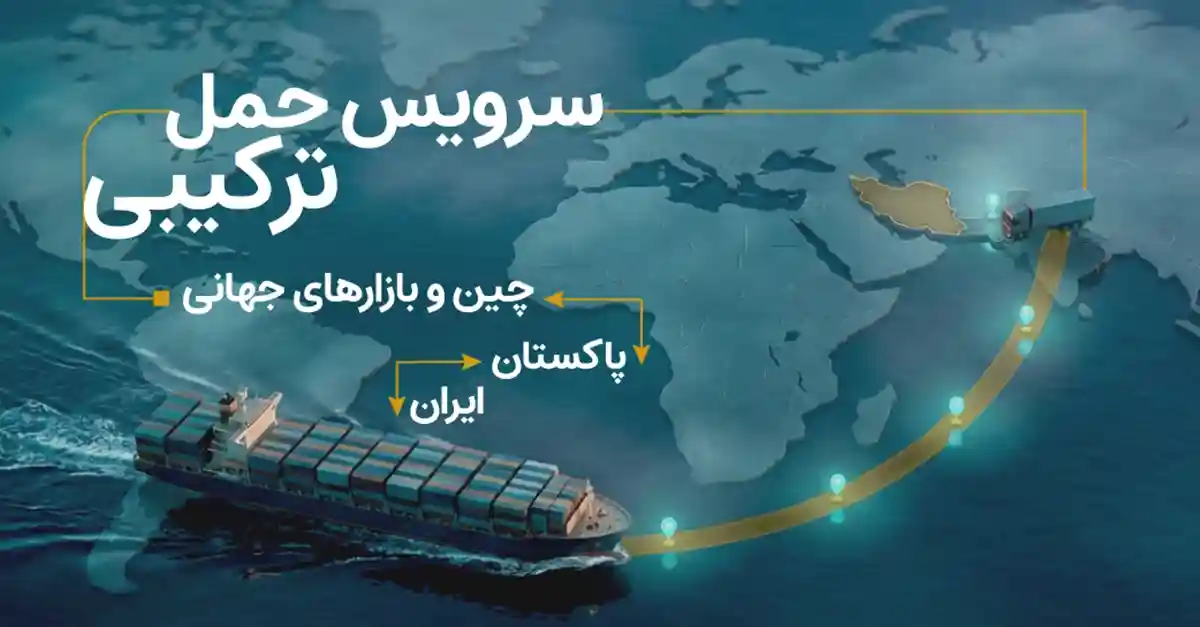
Iran–Pakistan–China Multimodal Shipping for Global Trade
Farin Sahel Arvand’s Operational Solution for Building Alternative Corridors
In today’s international trade environment, route selection can no longer be treated as a purely operational matter. For importers, exporters, manufacturers, and cargo owners, the shipping corridor has become part of a broader strategic decision tied to risk management, market access, supply continuity, and commercial resilience. A well-chosen route should do more than move cargo from origin to destination. It should help a business remain agile in the face of regional disruptions, sudden restrictions, and shifting market conditions.
Against this backdrop, the Iran–Pakistan–China multimodal corridor, with extensions to India, Africa, and other global markets, has gained increasing relevance as a practical logistics option. By linking Iran’s inland network to major Pakistani ports and then connecting into South Asia’s maritime system, this corridor can provide companies with broader access to target markets. Its value becomes especially clear when businesses need to diversify transport corridors, reduce dependence on conventional routes, and maintain viable rerouting options under changing circumstances.
Within this framework, Farin Sahel Arvand, as an NVOCC agency and an active player in ocean freight, offers this route not merely as a secondary option, but as a specialized ancillary service tailored to current market realities. The objective is straightforward: to enhance access, strengthen supply chain continuity, and improve logistical flexibility for clients operating in volatile trade conditions.
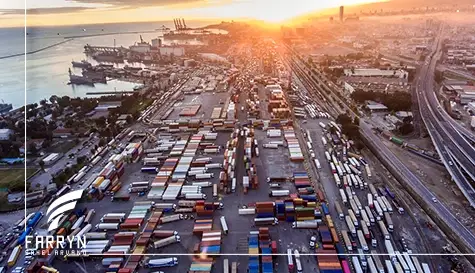
Why the Pakistan Corridor Has Become a Smart Option for Selected Shipments
Not every shipment should move through the same logistics pattern. In many cases, cargo owners are looking for a route that expands their reach into South Asia, India, Africa, or broader international destinations. Under those circumstances, the Pakistan corridor can become a practical part of the decision-making process.
Its principal advantage lies in the fact that Iran can connect by land to key Pakistani ports, most notably Karachi, and in certain scenarios Gwadar, after which the cargo enters the maritime network serving South Asia and beyond. For companies seeking route diversification, reduced concentration on limited corridors, and workable rerouting alternatives, this structure can offer meaningful operational value.
From a commercial decision-making perspective, this route is typically considered when several conditions apply:
- Competitive pricing relative to other available routes
- A strategic need to diversify transport corridors
- Target markets are located in South Asia, India, China, or Africa
- Reducing dependence on traditional routes has become a priority
- Rerouting is part of the broader shipping plan
For that reason, the Pakistan corridor is not best understood as a universal route for every shipment. It is a targeted logistics solution for specific trade scenarios.
How Farin Sahel Arvand Positions This Service Alongside Its NVOCC Activities
Farin Sahel Arvand’s core identity as a maritime logistics company and NVOCC agency is built around professional freight management, route selection, and the development of executable shipping solutions aligned with real market conditions. Yet in the current market, many clients require more than a standard ocean freight booking. They need a logistics partner capable of designing an alternative route, shaping an executable scenario, and delivering a flexible operating model when conventional pathways become less efficient or less dependable.
That is precisely the role of the Pakistan multimodal service within Farin Sahel Arvand’s portfolio. It is an ancillary service, but one with clear operational value. It has been structured to answer market demand, diversify shipping options, and preserve continuity in changing conditions. In this setup, Farin Sahel Arvand is not simply coordinating cargo movement. It acts as an execution partner involved in route design, scenario selection, coordination between the land and sea legs, and the management of rerouting when disruption occurs.
This approach allows importers and exporters to rely not on a single restricted route, but on a more adaptable multimodal framework that can be adjusted in response to the realities of international trade.
How the Corridor Works in Practice
Depending on whether the shipment is structured as an import or an export, the corridor can function in two primary directions.
In an import scenario, the general structure is as follows:
China / Global Origin → Ocean Freight → Pakistani Ports (Karachi / Gwadar) → Trucking → Iran
Under this model, cargo first moves from China or another global origin to Pakistan by sea, and is then transported overland into Iran. This can be particularly relevant for companies seeking an alternative access model for inbound supply.
In an export scenario, the route is generally organized as:
Iran → Inland Trucking → Pakistan → Ocean Freight → China / India / Africa / Other Destinations
In this case, cargo is moved overland from Iran to one of Pakistan’s ports and then shipped onward through the South Asian maritime network toward the final destination. For exporters aiming to access South Asian or African markets, or for those who need an alternative operating route under specific conditions, this model can be highly practical.
The key point is that the success of this corridor does not depend solely on the existence of the route itself. It depends on how well the operation is designed, coordinated, and adapted to the shipment’s actual requirements.
How Shipping Costs Are Evaluated on the Pakistan Route
Cost is naturally one of the main issues in route selection. In reality, shipping via Pakistan does not follow a single fixed rate structure. Like many multimodal corridors, pricing is shaped by a combination of operational and commercial variables. Each quotation therefore needs to be assessed on the basis of the actual shipment profile, timing, and destination.
The main cost drivers generally include cargo type, shipment weight and volume, container requirements in FCL movements, the final route design, ocean freight levels to Pakistani ports, inland trucking charges between Pakistan and Iran, and prevailing market conditions such as capacity availability and seasonal fluctuations.
One important point should be emphasized: this route is not designed exclusively as a cost-cutting mechanism. Its main function is to create access and diversify transport options. In some cases, depending on the market and destination, it may also prove commercially competitive. However, its primary strength lies in operational flexibility, alternative routing access, and reduced dependence on a single corridor.
Transit Time Expectations
Transit time on this route depends on the exact mix of land and ocean services, border crossing conditions, port operations, and the final destination. That means no single transit figure can apply to every scenario. Still, there are workable planning ranges.
For imports from China to Iran via Pakistan, ocean transit to Pakistan may take roughly 15 to 30 days, with customs handling and inland transfer adding another 5 to 10 days, and overland movement from Pakistan into Iran requiring approximately 5 to 10 days. That places the overall transit range at about 25 to 50 days.
For exports from Iran via Pakistan to China, India, Africa, or other destinations, inland transport from Iran to Pakistan may take around 3 to 7 days, followed by ocean transit of roughly 15 to 30 days, leading to an estimated total of about 18 to 40 days.
The real time-related advantage of this corridor, however, is not just the final number of days. It is the availability of a viable rerouting structure in both import and export directions. For many cargo owners, that flexibility is more valuable than a marginal difference in transit time.
Indicative Transit Overview
| Scenario | Estimated Time |
|---|---|
| China → Pakistan → Iran | 25–50 days |
| Iran → Pakistan → China / India / Africa | 18–40 days |
The Main Benefits of the Pakistan Corridor
For businesses seeking greater maneuverability in international trade, this corridor offers several meaningful advantages. First, it creates an operational alternative in South Asia. That matters when disruptions or restrictions affect other routes and companies need a realistic fallback option.
Second, it connects Iran overland to strategically important Pakistani ports. This can be particularly valuable for shipments bound for South Asia, India, China, or African markets. It also supports a broader multimodal structure that integrates road and sea transport in a way that increases resilience.
Additional benefits may include:
- Stronger supply chain flexibility
- Lower dependence on traditional and concentrated corridors
- Faster rerouting potential under changing conditions
- Better access to selected regional and extra-regional markets
In essence, this route is most valuable to businesses that want to build trade flows on a more diversified and more durable logistics network.
Constraints and Operational Considerations
As with any corridor, the Pakistan route should be selected with a clear understanding of its limitations. One major consideration is its reliance on border conditions and the quality of inland infrastructure on the Pakistan leg. Because this is a multi-stage route, close coordination is essential across each segment.
A second factor is that some direct service options may be less diverse than those available through larger regional hubs. That makes route design and service selection even more important.
Businesses should also consider that inland and port-related costs may fluctuate, the route typically requires more operational coordination than simpler models, and it will not be the best option for every cargo type or every timing requirement. The corridor delivers the best results when a proper feasibility assessment is carried out before execution, taking into account the commodity, timing, budget, and final destination.
Which Businesses Are Best Suited to This Service?
The Pakistan corridor is often especially relevant for companies that want to expand market access while diversifying their shipping options. This typically includes importers sourcing from China and India, exporters targeting Africa or South Asia, trading companies, manufacturers, and cargo owners moving FCL shipments.
It is particularly useful for businesses that do not want to remain dependent on a single traditional route. If a company’s market development strategy includes destinations in South Asia or Africa, or if its supply chain planning requires alternatives to conventional Persian Gulf-centered patterns, this corridor can become a meaningful part of its logistics strategy.
Why This Route Should Be Managed by a Specialized Operator
On paper, the Iran–Pakistan–China / India / Africa route may appear to be a simple combination of road and sea transport. In practice, however, synchronizing multiple segments, choosing the right timing, aligning the route with market conditions, and handling changes along the way make it a specialized logistics scenario. The more professionally this structure is designed, the lower the risk of delay, duplication, and avoidable cost escalation.
In this context, a company that combines NVOCC experience with real knowledge of alternative corridors, multimodal planning, and rerouting management can create substantial value for cargo owners. Farin Sahel Arvand approaches this service in precisely that way. Clients are not offered merely a freight quote; they are given access to an executable logistics scenario designed around market realities, cargo characteristics, and commercial objectives.

The Practical Advantage of Working With Farin Sahel Arvand
Farin Sahel Arvand has built this service around several core principles: multimodal route design, scenario optimization based on current market conditions, rerouting capability, coordination of inland and ocean legs, and operational support from origin to destination. This means clients are not confronted with a generic transport suggestion, but with a solution shaped around their actual trade requirements.
That distinction matters. A standard freight service may only move cargo. A true supply chain solution helps businesses preserve continuity, expand market reach, and remain operationally flexible when the market becomes less predictable.
Final Perspective
The defining strength of the Iran–Pakistan–China multimodal corridor is not simply cargo movement. Its real value lies in the intersection of supply chain continuity, broader market access, and operational flexibility. When approached without proper planning, even a promising corridor may underperform. But when it is designed carefully, aligned with the shipment’s commercial purpose, and supported by an experienced logistics operator, it can become a highly effective instrument for trade development.
For companies evaluating alternative routes for imports or exports, especially those working across Iran, the Persian Gulf region, South Asia, China, India, and African markets, this corridor deserves serious consideration. In the current trade environment, resilience increasingly depends on having more than one viable path to market. That is exactly where a route such as this can provide strategic value.