Understanding Container Types: A Comprehensive Guide for Global Shipping
Containerized shipping is one of the safest, most efficient, and cost‑effective methods for moving goods across the globe. However, choosing the wrong container type can lead to significant financial losses, damaged cargo, or logistical delays. Containers vary widely in dimensions, structure, and intended use, and selecting the right one for your specific cargo—and transport route—is essential for success.
In this guide, we provide a detailed overview of the 12 most common container types, helping you make informed decisions for your supply chain requirements.
12 Common Container Types and Their Applications
Every shipment has unique requirements based on dimensions, weight, and environmental sensitivity. For example, perishable goods cannot be shipped without climate control. This is why specialized containers have been developed to handle diverse cargo types safely.
General Purpose (Dry) Container
The Dry Container is the industry standard. Fully enclosed and weather‑resistant, these containers protect cargo from moisture, dust, and environmental variations. Constructed from high‑strength steel or aluminum, they offer maximum security against impact and pressure. They are ideal for general packaged goods, dry bulk, and non‑perishable items.
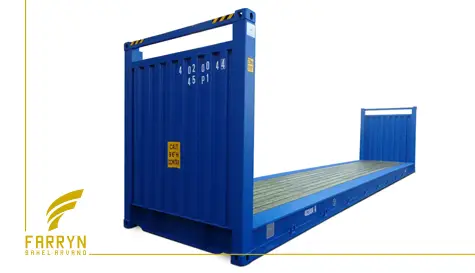
Flat Rack Container
Featuring collapsible sides, Flat Racks create a stable, flat platform. They are specifically designed for heavy, oversized, or bulky cargo, such as construction machinery, vehicles, or industrial pipes that are too wide or tall for standard containers.
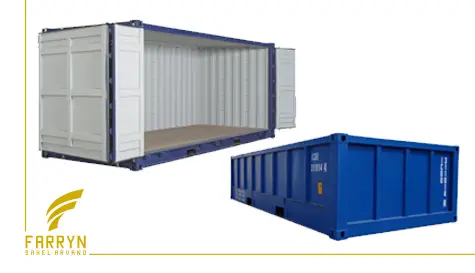
Open Top Container
When cargo is too tall for standard loading or requires overhead access, an Open Top Container is the solution. Since they lack a roof, items can be loaded via cranes. A tarpaulin cover can be securely fastened to protect the cargo from the elements during transit.
Double Door (Tunnel) Container
As the name suggests, Tunnel Containers have doors on both ends. This design significantly improves loading and unloading efficiency, especially for long or bulky items like steel rods or iron bars. If only one end is needed, the other can be sealed, functioning as a standard dry container.
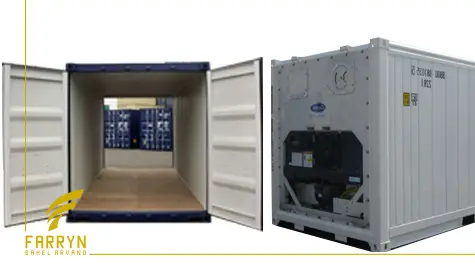
ISO Reefer (Refrigerated) Container
Reefers are essential for temperature‑sensitive cargo, such as fresh produce, meat, pharmaceuticals, and chemicals. Constructed from high-grade, self‑protecting Cor-Ten steel, they feature an integrated refrigeration unit that maintains precise, stable temperatures throughout the entire transit period.
Insulated Container
Unlike Reefers, Insulated Containers do not have active cooling/heating systems. Instead, they use high-efficiency thermal insulation to minimize temperature fluctuations. They are suitable for goods that require stable conditions for shorter periods, such as specific pharmaceuticals or temperature-sensitive bulk chemicals.
ISO Tank Container
Tankers are specialized for transporting liquids and gases, including hazardous materials. The internal cylindrical tank is made from corrosion‑resistant metals. Crucially, they are filled to 80–95% capacity; the remaining “ullage” space allows for liquid expansion, ensuring safety during long-distance transit.
Half‑Height Container
With a lower profile and a lower center of gravity, Half‑Height Containers are built to handle exceptionally dense and heavy materials. They are commonly used for transporting ore, coal, scrap metal, and heavy industrial tools, facilitating easier loading and unloading.
Open Side Container
These containers feature full-opening side walls, providing complete access to the interior. They are highly practical for oversized cargo that cannot be loaded through the front doors, allowing for flexible loading options in busy logistics environments.
Special Purpose Container
These are custom-built for non‑standard cargo that does not fit into any conventional shipping container. Due to their bespoke nature and higher costs, they are only utilized for unique, high‑value, or exceptionally oversized shipments.
Livestock Container
Designed to transport live animals, these containers prioritize well‑being. They feature specialized ventilation ports for fresh air circulation and unique drainage/waste management systems in the lower sections to maintain sanitary conditions and minimize animal stress during transit.
Winch Container
While not a distinct container “type,” the Winch System is a critical mechanical addition, typically installed on Flat Rack containers. It provides a means to pull or lift heavy cargo into place, which is invaluable in industrial settings where access to cranes or heavy loading machinery is limited.
Container Sizes: A Quick Reference
While specifications can vary by carrier, most global logistics rely on these standard dimensions:
- 20‑Foot Standard: With an internal volume of approx. 33 m³, these are perfect for dense, heavy goods like tiles, metals, or machinery parts.
- 40‑Foot Standard: Offering double the length and approx. 68 m³ of space, these are ideal for lighter, bulkier goods like textiles, consumer electronics, or packaged retail products.
- 45‑Foot High Cube: Taller and longer than standard 40‑footers, these offer up to 86 m³ of capacity. They are the best choice for high-volume shipments requiring maximum internal space.
Make the Right Choice for Your Logistics
Selecting the appropriate container is not just about logistics—it’s about protecting your cargo and your bottom line. An incorrect choice can lead to significant transit damage and increased costs.
At Farryn, we specialize in providing tailored shipping solutions for your unique cargo requirements. Whether you are dealing with complex temperature-sensitive goods or oversized industrial equipment, our team of logistics experts ensures your shipment reaches its destination safely and efficiently.
Contact us today to discuss your shipping needs and optimize your supply chain strategy.