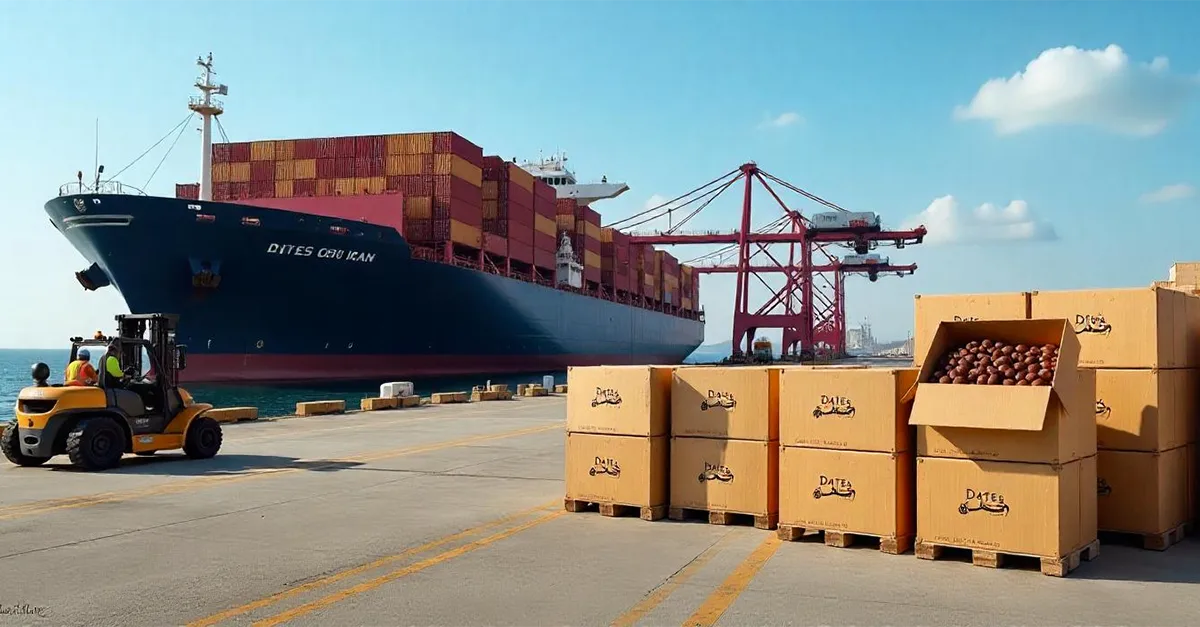
Importing and Trading Dates from Iran: Complete Guide to Permits, Tariffs, and Profitability
According to official statistics, in 2023–2024 (Iranian year 1402), nearly 389,495 tons of dates worth over USD 345 million were exported from Iran. This represents a significant increase compared to the previous year.
If we intend to enter the import and trade of dates from Iran, what steps must we follow? Which destination markets are most suitable for us? What permits are required? And what is the actual profitability of the date trade?
In this guide, we will address all these questions in detail.
Steps for Importing and Trading Dates from Iran
Before initiating any commercial activity, we must be familiar with the full process—what to start with and what items to include in our operational checklist. Below, we review the primary steps.
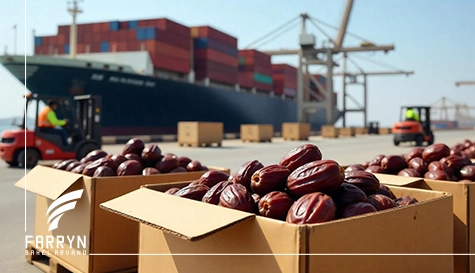
1. Selecting a Reliable Supplier
The first step in importing dates from Iran is to identify a reputable, direct supplier. The dates we source must be competitive in quality and priced appropriately to ensure a healthy profit margin.
Experience shows that closer cooperation with producers allows for better control over quality, packaging standards, and lead times.
2. Analyzing the Target Market
Next, we must determine the most suitable destination market. To ensure successful trade, we need an in‑depth understanding of the importing country’s market conditions.
Questions to consider include:
- Which date varieties are most in demand? Mazafati, Piarom, or Deglet Noor types?
- What is the consumption volume?
- What are the flavor preferences of consumers?
- Who are the existing competitors?
Such insights help us select the right product and communicate more effectively with potential importers. Market data can be obtained through international exhibitions, joint chambers of commerce, or export‑market research firms.
3. Identifying and Negotiating with Buyers
After analyzing the target market, we must initiate negotiations with importers, food distributors, or retail chains in the destination country. Discussions typically cover price, payment terms, purchase volume, and delivery schedules.
Where direct outreach is not feasible, export–import intermediaries can assist in facilitating these negotiations.
4. Obtaining Legal Permits
As with any food commodity, importing dates requires specific documentation and certificates for compliance with export regulations in Iran and import regulations in the destination country. A checklist of required documents must therefore be prepared well in advance.
5. Complying with Importing Country Standards
Each country enforces unique food‑import regulations. Regions such as the European Union impose strict requirements regarding hygiene, chemical parameters, packaging specifications, and labeling details.
Failure to comply may lead to shipment rejection, fines, or import restrictions. Therefore, all standards must be reviewed and fully met prior to shipment dispatch.
6. Professional and Standard Packaging
Dates are a sensitive food product, requiring hygienic, durable, and visually appealing packaging. Standardized packaging helps extend shelf life, maintain quality during transit, and build importer trust.
In some countries, products with poor packaging may be rejected regardless of their actual quality.
Furthermore, the graphic design of the packaging plays a direct role in brand visibility within the market.
7. Cargo Transportation and Shipment
At this stage, we must select the appropriate transport mode. Depending on the destination, we may use ocean freight, road transport, or air freight, or even a combination of these modes for cost optimization.
Working with experienced logistics and freight‑forwarding companies familiar with customs and clearance procedures significantly streamlines the movement of cargo. These companies identify the most cost‑effective shipping method and ensure the product maintains its integrity throughout the journey.
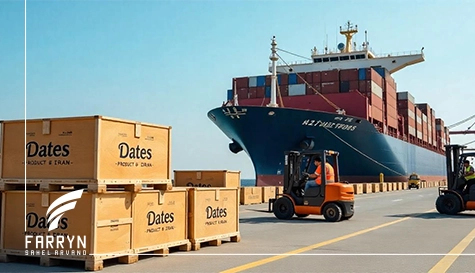
Which Are the Best Countries for Importing Dates from Iran?
Many countries lack sufficient domestic date production and therefore seek high‑quality Iranian dates. Selecting the best market depends on several factors, such as:
- demand level,
- geographic proximity,
- import/export regulations,
- food‑safety standards.
Below are key destination markets:
India
India is unquestionably one of the top destinations. According to the Iranian Industry, Mining and Trade Organization, India imported 90,237 tons of dates in 2023–2024, ranking first among global importers—driven by high population, high consumption, and especially seasonal demand during religious events.
With appropriate quality and packaging, the Indian market is highly profitable.
United Arab Emirates (UAE)
The UAE is another strategic market due to strong commercial ties with Iran and close maritime borders. It also acts as a regional transshipment hub, importing dates in bulk, processing and repackaging them, and then re‑exporting to other countries.
Morocco
Morocco has emerged as a rapidly growing market, with annual imports exceeding USD 212 million, reflecting strong potential for Iranian dates.
Malaysia
Malaysia is another attractive market, particularly due to its large Muslim population and increased date consumption during Ramadan.
Other Muslim‑majority countries—including Pakistan, Turkey, Kazakhstan, and Iraq—are also major destinations. Each market, however, has distinct import regulations and consumer preferences; understanding these details enables accurate market positioning and higher profitability.
Required Documents and Permits for Trading Dates from Iran
To ensure smooth clearance at Iranian customs and acceptance at destination ports, the following documents are essential:
- Valid Commercial Card: Issued by the Iranian Chamber of Commerce; necessary for official trade.
- Health Certificate & Product Hygiene Approval: Issued by the Ministry of Health and Food & Drug Organization, confirming product safety.
- Standard Certificate (if required): Mandatory for export to countries with strict food‑safety requirements (EU, USA, certain Asian states).
- Customs Declaration & Commercial Invoice: Required for export clearance and formal documentation.
- Certificate of Origin: Issued by the Chamber of Commerce, confirming Iranian origin of the dates.
- Compliant Packaging & Product Label: Including date variety, weight, production/expiry dates, country of origin, and health‑permit number.
How Profitable Is the Trade of Dates?
Profit margins in the date business depend on multiple variables:
- date variety,
- product quality,
- packaging method,
- destination market,
- exchange-rate fluctuations,
- import–export tariffs.
For instance, exporting premium varieties such as Mazafati or Piarom with high-end packaging to markets like India, Malaysia, and the UAE typically results in higher margins.
Conversely, tariff policies can reduce profitability. For example, in 2024–2025 (Iranian year 1403), the export duty on Mazafati dates increased from zero to 50% to regulate the domestic market.
High customs duties in destination markets (e.g., Russia, China) further impact margins.
In contrast, low‑tariff countries with high consumption offer substantial profit opportunities. Therefore, monitoring tariff schedules and customs regulations is essential.
When managed correctly—with proper variety selection, packaging, and market targeting—the trade of Iranian dates can be highly profitable. However, poor planning may result in low profitability or even loss.
Transportation: The Final and Critical Link in the Date Supply Chain
In the trade of dates from Iran, transportation is a decisive factor. If cargo is not shipped at the correct time, under proper transport conditions, or according to the importing country’s regulations, product quality may deteriorate and customs issues may arise.
Selecting the right transport mode, precise transit‑time management, and familiarity with customs workflows directly affect the success of the shipment.
In this context, Farryn Sahel Arvand, with its specialized knowledge in logistics and export services, can serve as a reliable partner.
By providing integrated solutions in packaging, customs clearance, and international freight, the company ensures safe, fast, and cost‑effective access to global markets.
For optimal results, consulting with their specialists at the beginning of the process is recommended.