CBM (Cubic Meter) and How It Is Calculated
How much space does our cargo occupy inside a container or transport vehicle? How many units can fit in a single container? How many containers are needed for a full shipment? And how is the shipping cost calculated? Freight forwarding companies base all these calculations on a key parameter called CBM.
In this article, we explain what CBM is, how to calculate it, and how it impacts freight charges.
What Is CBM?
CBM, or Cubic Meter, is a unit of measurement for cargo volume used in international shipping. It quantifies the physical space occupied by goods inside containers, trucks, or airplanes.
Why Is CBM Important in Shipping?
Knowing the cargo’s volume (CBM) is crucial for several operational reasons:
- Container selection: Accurate knowledge of cargo volume enables correct selection of container size and type, ensuring no unnecessary extra costs and optimizing the shipment’s efficiency and risk management.
- Freight cost determination: Freight carriers use CBM to calculate volumetric weight and set charges accordingly.
- Space optimization: Understanding cargo volume helps organize container or warehouse space efficiently and prevents wasted capacity.
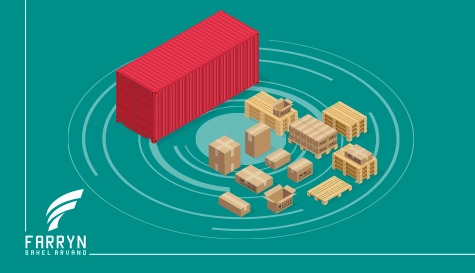
Formula for Calculating CBM
The formula for CBM is the same as the volume calculation in mathematics. Since cargo can have various geometric shapes, the calculation differs accordingly. The critical point is that all dimensions must be measured in meters.
Rectangular Prism (Cuboid)
Most packaging is box-shaped and can be calculated as follows:
Length (m)×Width (m)×Height (m)=CBM \text{Length (m)} \times \text{Width (m)} \times \text{Height (m)} = \text{CBM}
For example, assume a carton box has dimensions: length 50 cm, width 40 cm, height 60 cm. First, convert these to meters:
0.5×0.4×0.6=0.12 CBM 0.5 \times 0.4 \times 0.6 = 0.12\, \text{CBM}
If there are 10 such cartons, the total shipment volume becomes:
0.12×10=1.2 CBM 0.12 \times 10 = 1.2\, \text{CBM}
Cylinder
Certain products are stored in barrels or rolls, e.g., petroleum products, carpets, or pipes. The volume formula is:
CBM=π×(Radius)2×Height \text{CBM} = \pi \times ( \text{Radius} )^2 \times \text{Height}
where π≈3.1416\pi \approx 3.1416.
Irregular Shapes
For items without regular geometric shapes, such as industrial machinery, the maximum length, width, and height are considered to estimate CBM:
Max Length×Max Width×Max Height=CBM \text{Max Length} \times \text{Max Width} \times \text{Max Height} = \text{CBM}
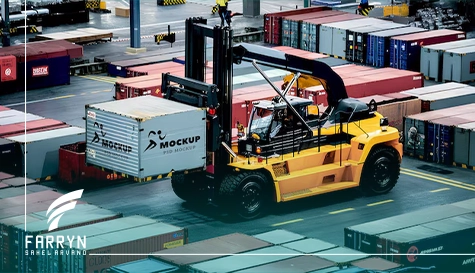
How Does CBM Affect Freight Cost Calculation?
As mentioned, CBM indicates how much space cargo occupies inside a transport vehicle. When cargo has a low actual weight but a high volume, freight companies often use volumetric weight instead of actual weight to calculate charges. Volumetric weight is an assumed weight derived from cargo volume, expressed in kilograms (kg).
To convert CBM into volumetric weight, fixed conversion factors are applied depending on the mode of transport:
- In air freight, 1 CBM = 167 kg
- In road freight, 1 CBM = 333 kg
- In sea freight, 1 CBM = 1000 kg (1 metric ton)
After calculating volumetric weight, the freight company compares it with the actual cargo weight, charging based on whichever is higher.
In sea freight, a general rule applies: if cargo weight is less than 1 ton, charges are based on volume (CBM); if the weight exceeds 1 ton, charges are calculated on the actual weight. In other modes (air and road), the higher of volumetric or actual weight is always applied.
What Are the CBM Capacities of Containers?
Knowing the usable volume of various container types allows you to select the most appropriate container for your cargo. This facilitates precise shipment planning, informed packaging and loading decisions, and better cost management.
Approximate dimensions and volumes of common containers are as follows:
| Container Type | Length (cm) | Width (cm) | Height (cm) | Approximate Volume (CBM) |
|---|---|---|---|---|
| 20-foot Container | 589 | 234 | 238 | Approximately 26–28 |
| 40-foot Container | 1200 | 234 | 238 | Approximately 56–58 |
| 40-foot High Cube Container | 1200 | 234 | 269 | Approximately 60–68 |
| 45-foot High Cube Container | 1251 | 245 | 269 | Approximately 72–78 |
You Are Not Alone in Choosing Containers and Calculating Volume
Understanding what CBM is and how to calculate it helps avoid errors in selecting containers, estimating freight costs, determining packaging types, and managing warehouse space.
However, if you still are unsure about the required container space or the optimal packaging for your cargo, you can consult the Farryn Sahel Arvand team. With extensive experience in international transport, they help ensure your shipment is cost-effective, reliable, and optimized.