The Port Power Outage Challenge in Maintaining Reefer Container Temperatures
In maritime transportation of temperature‑sensitive cargo, temperature stability is a critical factor in ensuring product quality, safety, and acceptance of the shipment at the destination. Much of this stability is established not during the ocean voyage itself, but at ports of origin, transshipment hubs, and destination terminals, where reefer containers rely heavily on shore power supply.
Short-term port power outages—even those lasting only a few minutes—are considered one of the hidden yet influential risks within the cold chain. These interruptions are often overlooked in official operational reports, yet they can have significant and cumulative impacts on the thermal stability of reefer containers.
This article examines how such short-term outages occur, their impact on reefer refrigeration systems, the reasons shipments may be rejected at destination, and practical approaches for managing this risk within maritime cold chain logistics.
Dependence of Reefer Containers on Shore Power
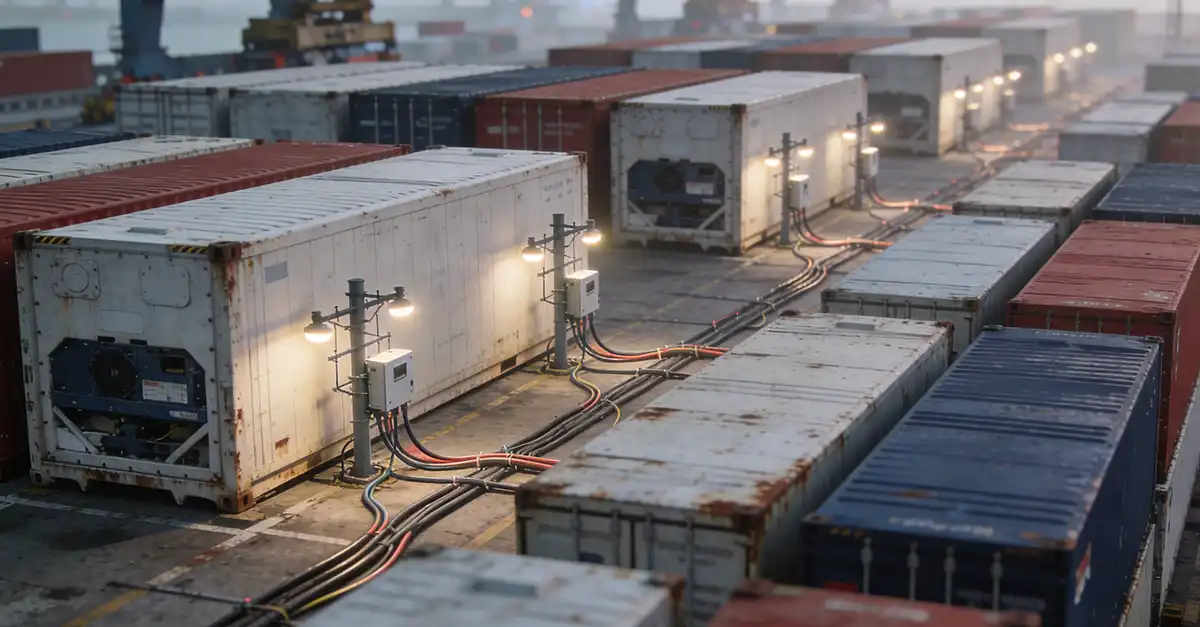
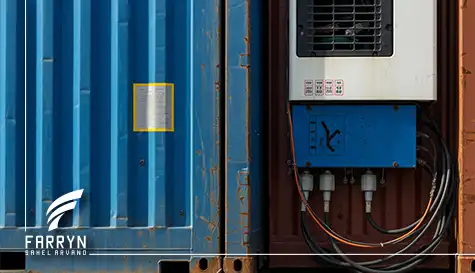
While reefer containers are stationed at port—whether prior to loading, during yard waiting periods, or after discharge—they remain connected to a continuous port electricity supply. During this period:
- The refrigeration system relies entirely on shore power.
- Compressors, fans, and temperature control systems operate continuously.
- Any interruption in power supply directly affects the container’s thermal performance.
Contrary to common assumptions, reefer containers do not possess effective internal energy storage systems capable of bridging power outages. Consequently, even outages lasting only a few minutes can lead to temperature instability.
What Is a Short-Term Port Power Outage and Why Does It Occur?
A short-term port power outage refers to electrical interruptions typically lasting from a few seconds to several minutes, and these events are rarely recorded as formal incidents. Common causes include:
- Fluctuations in the port’s electrical grid
- Relocation of containers between power outlets
- Yard repositioning operations
- Maintenance activities within electrical infrastructure
- Grid overload during peak operational demand
Because these interruptions are brief, they are frequently omitted from official logs or transport reports. However, their physical impact on internal container temperature is measurable and operationally significant.
Thermal Response of Reefer Containers to Power Interruption
When shore power is interrupted, several processes occur simultaneously:
- The compressor stops, halting active cooling generation.
- Air circulation declines as fans either stop or continue only through limited inertia.
- Heat exchange with the surrounding environment begins, allowing external heat to penetrate through container walls and roof structures.
In newer reefer units this process may occur more gradually; however, in older containers or those with degraded insulation, temperature increases can occur more rapidly and unevenly.
The Concept of Hidden Thermal Shock
One of the most significant consequences of short power outages is the occurrence of hidden thermal shock. These thermal events:
- May involve temperature deviations of only 1–2°C
- Occur within very short time intervals
- May remain undetectable in averaged temperature records
Even minor fluctuations of this nature can trigger irreversible biochemical reactions in temperature‑sensitive commodities such as pharmaceuticals, dairy products, and fresh produce.
The Cumulative Effect of Repeated Power Interruptions
A critical factor in evaluating port power outages is their cumulative impact. A single outage may appear insignificant, but repeated occurrences within one port—or across multiple transshipment ports—can lead to notable temperature instability.
This phenomenon, known as Accumulated Thermal Stress, becomes particularly relevant along long maritime routes where cargo may remain connected to port power multiple times during transit.

Why Temperature Data Often Appears “Normal”
Exporters frequently encounter a puzzling contradiction:
• Temperature records remain within acceptable operational limits.
• Yet the shipment is rejected upon arrival at destination.
The explanation lies in sensor positioning and measurement methodology. Temperature sensors are typically installed near the return air flow, capturing averaged airflow temperatures rather than the full spatial distribution of temperature within the container.
As a result, localized fluctuations caused by short-term power outages may remain undetected in the recorded data.
The Role of Cargo Type in Sensitivity to Power Interruptions
Temperature-sensitive commodities do not respond uniformly to port power interruptions. For example:
- Pharmaceuticals and vaccines have extremely narrow tolerance ranges.
- Meat and seafood are highly sensitive to short-term thermal shocks.
- Fresh fruits may appear visually intact but experience reduced shelf life.
Therefore, risk assessment related to port power outages should be conducted based on cargo sensitivity, rather than relying solely on general container standards.
Differences Between Ports in Terms of Outage Risk
Not all ports exhibit the same level of electrical reliability. Factors influencing outage probability include:
- Electrical infrastructure quality
- Volume of reefer container traffic
- Local climate and ambient temperature conditions
- Equipment maintenance standards
Specialized temperature‑controlled logistics providers pay close attention to these variations when planning shipping routes.
Legal and Insurance Implications
Short-term port power outages typically:
- Are not classified as force majeure events
- Are rarely recorded as official operational incidents
- Are difficult to substantiate in insurance claims
Consequently, the operational and financial risk is often transferred to the exporter, further emphasizing the importance of preventive management of reefer temperature stability.
The Role of Specialized Reefer Shipping Companies in Risk Management
Shipping companies specializing in temperature-controlled logistics can mitigate the risk of port power outages through several operational strategies:
- Selecting routes and ports with higher electrical stability
- Minimizing container dwell time within port yards
- Matching container type to the sensitivity profile of the cargo
- Monitoring temperature behavior before and after port stops
Such practices extend beyond simple cargo transport and represent active cold chain management.
Conclusion
Short-term port power outages may appear negligible, yet they represent one of the hidden but consequential risks affecting the thermal stability of reefer containers. The cumulative impact of these interruptions—particularly in maritime transportation of temperature-sensitive cargo—can result in quality degradation, reduced shelf life, or even complete rejection of shipments at destination, despite temperature records appearing normal.
Understanding and proactively managing this risk is a key factor distinguishing specialized cold chain logistics providers from general freight operators.