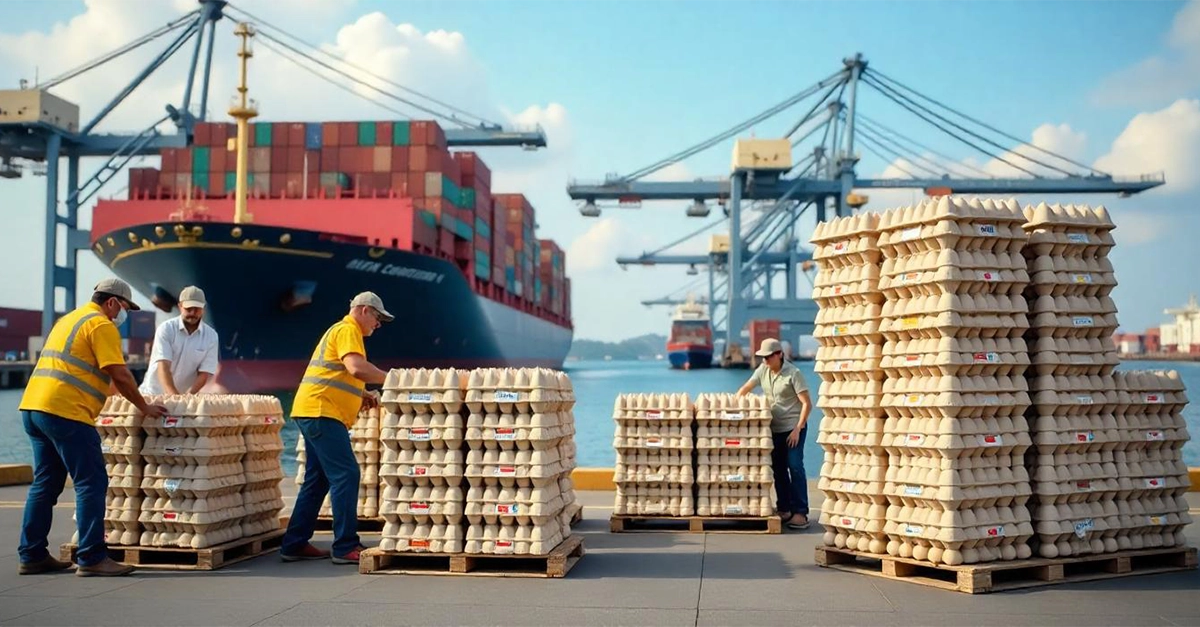
How to Import Eggs from Iran: A Complete Guide for International Buyers
Iran is currently the ninth-largest egg producer in the world, exporting around 135,000 tons of eggs annually to 18 countries. Thanks to its large-scale poultry industry and competitive pricing, Iran has become an attractive sourcing market for international buyers seeking reliable egg suppliers.
However, importing eggs from Iran requires familiarity with export regulations, product standards, logistics requirements, and documentation procedures. In addition, because eggs are a perishable and fragile commodity, transportation and cold‑chain management must comply with international standards.
In this guide, we explain how international traders can import eggs from Iran, including the export process, quality standards, required documents, and key logistics considerations.
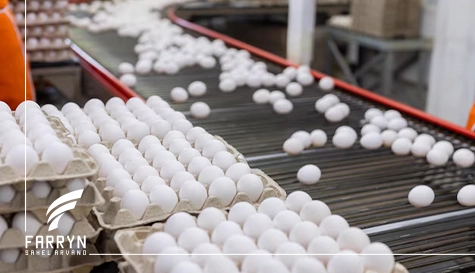
The Process of Importing Eggs from Iran
Importing eggs from Iran involves several coordinated steps between the Iranian exporter, logistics providers, and the buyer in the destination country. Because eggs are sensitive cargo, every stage—from production to delivery—must follow strict quality and transportation standards.
Below are the main stages involved in sourcing eggs from Iran:
1. Verifying Export Permits and Supplier Credentials
The first step for international buyers is to ensure that the Iranian supplier holds the necessary export permits issued by relevant authorities.
These include a valid Commercial Card (Iranian international trade license) as well as product-related certifications confirming that the eggs meet health, sanitary, and export regulations required by the Iranian government and importing countries.
Working with properly licensed exporters ensures that shipments can pass through customs clearance procedures without complications.
2. Egg Production and Quality Assurance
Eggs intended for export must be produced under strict sanitary and production standards. Factors such as quality poultry feed, hygienic farming conditions, and healthy laying hens play a critical role in ensuring consistent product quality.
Before shipment, eggs go through sorting and grading processes to ensure that only high-quality, undamaged eggs are selected for export markets.
This quality control process is essential for maintaining compliance with international food safety standards.
3. Export Packaging and Labeling
Once the eggs are selected, they must be packed using export-grade packaging designed for international transportation.
Eggs are typically arranged in protective trays and packed into reinforced cartons to prevent damage during handling and transit.
Each package must include accurate labeling information such as:
- Production date
- Expiration date
- Export permit number
- Producer or packing facility information
This information is necessary for customs inspections and food safety verification in the destination country.
4. International Transportation and Cold‑Chain Logistics
Choosing a reliable shipping and logistics provider is one of the most important factors when importing eggs from Iran.
Eggs are usually transported using temperature‑controlled refrigerated containers (reefer containers) to maintain freshness and product safety during transit.
Maintaining stable temperature conditions throughout the cold chain—from the packing facility to the final destination—is critical to preserving egg quality.
In addition, proper coordination of export documentation, customs clearance, and freight scheduling helps ensure the shipment arrives on time and in optimal condition.
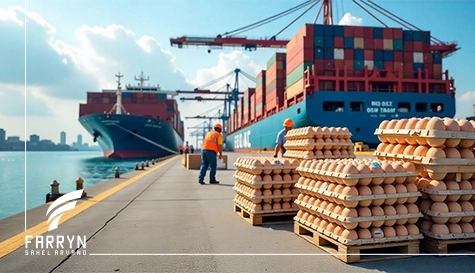
Quality Requirements for Exported Eggs
According to the Ministry of Industry, Mine and Trade, only eggs that meet specific quality standards are approved for export from Iran. International buyers should ensure that suppliers comply with the following criteria:
Intact and Undamaged Shells
Eggs must be completely intact, with no cracks, chips, or shell damage. Even small cracks may allow contamination and compromise food safety.
Smooth and Uniform Shell Surface
The eggshell should have a smooth and even surface, free from bumps or deformities. Rough shells can indicate lower-quality production.
Natural and Consistent Color
Eggshell color must be uniform and natural, whether white or brown. Dark spots or irregular coloring may indicate quality issues and may not be accepted in some markets.
Standard Weight and Size
Eggs must fall within defined weight categories commonly required in international markets. Importers often specify the preferred egg size categories before shipment.
Standardized Export Packaging
Eggs must be placed in specialized trays designed to minimize movement and impact during transportation. These trays are then packed in export cartons with standardized weights, facilitating safe shipping and efficient handling.
Key Export Documents Buyers Should Expect
When importing eggs from Iran, international buyers should ensure the exporter provides the necessary legal, sanitary, and trade documentation, including:
1. Valid Commercial Card
The Iranian exporter must possess a valid Commercial Card, which authorizes companies to conduct international trade.
2. Licensed Packing Facility
The facility responsible for packing the eggs must hold official operating permits and health certifications from the relevant authorities.
3. Licensed Production Unit
The poultry farm supplying the eggs must have a valid operational license and sufficient production capacity, typically at least 100,000 laying hens.
4. Exporter Identification Documents
The exporter must provide official identification and company registration documents to verify their legal business status.
5. Notarized Compliance Declaration
A formal notarized commitment confirming that the exporter complies with all regulations related to egg exports.
6. Veterinary Health Certificate
Issued by the Iran Veterinary Organization, this certificate confirms that the eggs meet required health and sanitary standards.
Major Import Markets for Iranian Eggs
Iran currently exports eggs to several regional and international markets, particularly neighboring countries that have strong demand for imported food products.
Key markets include:
- Iraq
- Afghanistan
- Qatar
- Oman
- Kuwait
- United Arab Emirates
These countries benefit from short transportation distances, lower logistics costs, and established trade routes with Iran.
In addition, Russia and Armenia have recently emerged as additional markets for Iranian egg exports. While export volumes to these countries remain smaller, they offer promising opportunities for future trade expansion.
For international buyers, selecting the right supplier in Iran involves evaluating several factors:
- Compliance with health and import regulations in the destination country
- Availability of cold-chain logistics infrastructure
- Stability of trade relations and logistics routes
- Ability to provide competitive pricing and consistent supply
Careful supplier and market evaluation plays a key role in building a reliable long‑term egg import partnership.
The Importance of Logistics and Choosing the Right Trade Partner
Transportation is one of the most critical elements when importing eggs from Iran. Because eggs are fragile and perishable, improper handling or unsuitable transport conditions can quickly reduce product quality.
To prevent these issues, shipments must be handled through professional cold‑chain logistics systems that maintain controlled temperatures throughout the journey.
Temperature fluctuations can lead to:
- Shell damage
- Bacterial contamination
- Reduced product shelf life
However, proper refrigeration alone is not enough. Challenges such as customs clearance delays, poor coordination between exporters and freight companies, or unreliable transport routes can also cause losses.
Therefore, working with experienced logistics and trade partners familiar with Iranian export procedures is essential.
How Farryn Sahel Arvand Supports International Egg Trade with Iran
For international buyers looking to import eggs from Iran, partnering with an experienced trade facilitator can significantly simplify the process.
Farryn Sahel Arvand specializes in export coordination, customs procedures, and international shipping logistics, helping foreign buyers connect with reliable Iranian suppliers and manage shipments efficiently.
With extensive experience in cross‑border trade operations and freight logistics, the company supports importers by ensuring compliance with regulations, coordinating documentation, and organizing secure transportation.
Businesses interested in importing eggs from Iran can begin by contacting Farryn Sahel Arvand for professional consultation and trade support.