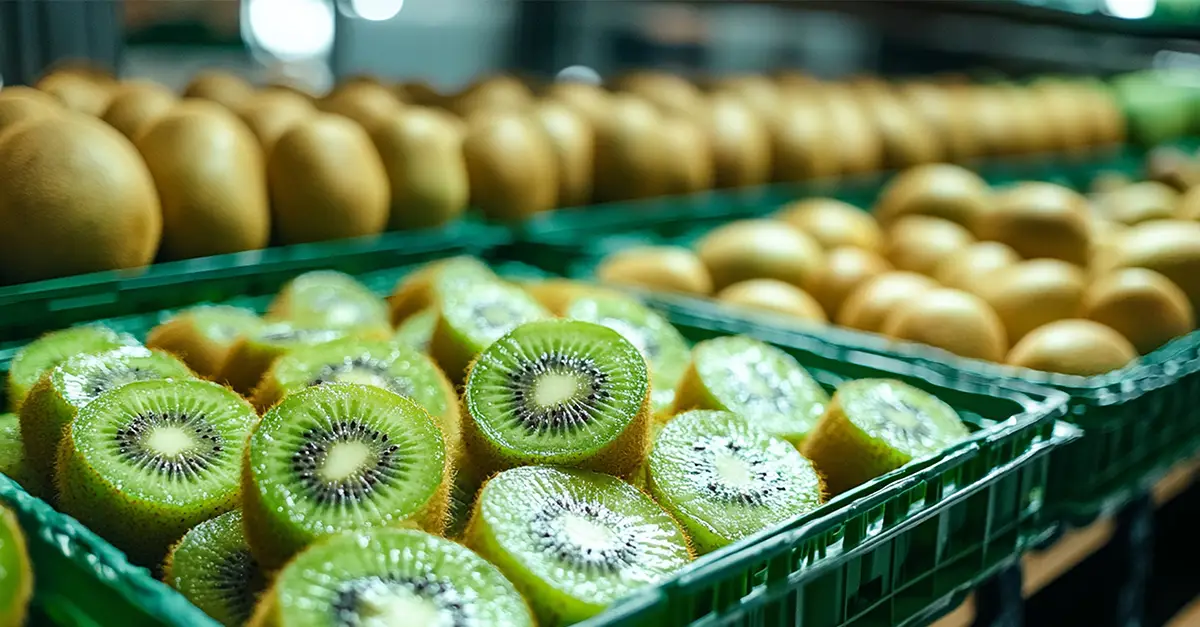
Complete Guide to Importing Kiwi from Iran and Succeeding in Global Markets
Iran is one of the major kiwi-producing countries in the Middle East. In recent years, kiwi from Iran has reached export volumes of more than 150,000 tons annually, supplying markets such as Russia, India, Azerbaijan, Georgia, the UAE, and other Gulf countries.
For international buyers, kiwi from Iran is attractive due to its competitive pricing, high natural sweetness, firm texture, and reliable seasonal availability.
But how can foreign importers successfully source kiwi from Iran?
Which destinations offer the best margins?
And what logistics and compliance steps are required?
This guide provides practical insights tailored specifically for global fresh-fruit importers.

Stages of Importing Kiwi from Iran
The harvest season for kiwi in Iran typically runs from mid‑October to early November, depending on the region (Gilan, Mazandaran, and Golestan). Proper harvest timing is essential to ensure optimal Brix level, firmness, and shelf life — key factors for international trade.
Importing kiwi from Iran involves several structured steps:
Market Research & Choosing the Right Destination
Before placing an order, importers should evaluate:
- Consumer size preferences
- Competing origins (Italy, Greece, New Zealand, Turkey)
- Seasonal supply gaps
- Import tariffs and phytosanitary requirements
- Retail pricing and wholesale demand
Some markets, especially in Europe and China, may require:
- Global GAP certification
- Strict pesticide residue compliance
- Official phytosanitary certificates
Understanding these requirements before shipment prevents delays and unexpected costs.
Packaging and Pre‑Shipment Preparation
Export‑grade kiwi from Iran must be:
- Clean and sorted
- Free from pests and bruising
- Harvested at correct maturity
Common packaging formats:
- Laminated export cartons (3‑ply or 5‑ply)
- Wooden crates (common for India and Turkey)
- Plastic baskets (wholesale markets)
Importers should clearly define:
- Size grading
- Carton strength
- Branding requirements
- Ventilation standards
Required Documents for Importing Kiwi from Iran
Exporters must provide:
- Phytosanitary Certificate
- Certificate of Origin
- Commercial Invoice
- Packing List
- Bill of Lading
- Global GAP (if required by destination country)
Incomplete documentation can result in customs inspections, clearance delays, or additional fees.
Choosing the Right Transport Method
Most importers use Reefer Containers (20’RH or 40’RH) to transport kiwi from Iran.
Optimal shipping temperature:
0°C to +1°C
Maintaining cold‑chain stability is essential. Temperature fluctuations can significantly reduce shelf life and quality.
Main export ports include:
- Bandar Abbas (Shahid Rajaee Port)
- Bandar Anzali (for CIS markets)
A professional logistics provider should manage:
- Pre‑cooling
- Reefer monitoring
- Humidity and CO₂ control
- Terminal coordination
Export Customs Procedures in Iran
The exporter handles:
- Export declaration
- Phytosanitary inspection
- Container sealing
- Export approvals
Importers must ensure all destination-country documents are aligned before shipment departure.
Distribution Strategy in the Destination Market
Once the shipment arrives, importers should prepare:
- Cold storage facilities (0°C)
- Wholesale or supermarket agreements
- Marketing materials
- Retail pricing strategy
Market preferences vary:
- Russia: Large, sweet fruit
- India: Competitive pricing + consistent supply
- Gulf countries: Premium packaging
- China & EU: Strict compliance standards

Most Attractive Markets for Kiwi from Iran
Russia
Strong demand due to climate conditions and limited domestic production.
India
Rapidly growing fruit-import market aligned with Iran’s harvest calendar.
Iraq
Short transit time and cost-efficient distribution.
Turkey
Acts both as a consumer and re‑export hub to Europe.

Profitability Factors When Importing Kiwi from Iran
Profit margins depend on:
1. Purchase Price at Origin
Varies by harvest timing, grade, and regional supply.
2. Packaging & Processing Costs
Higher-quality packaging increases retail value.
3. Logistics Costs
Includes inland transport, reefer freight, insurance, and port charges.
4. Destination Market Price
Driven by competition and seasonal availability.
5. Currency Exchange Rates
Stable pricing contracts reduce risk exposure.
Choosing the Right Logistics Partner
Importing fresh produce requires:
- Accurate cold‑chain management
- Reliable documentation
- Reefer shipping expertise
- On‑time coordination
Farryn Sahel Arvand provides professional reefer logistics and export coordination services for buyers sourcing kiwi from Iran, helping ensure safe transit and smooth customs processes.