Comprehensive Guide to Importing Urea from Iran; Types of Urea, Regulatory Requirements, and Practical Insights for Importers
The urea industry is experiencing rapid growth. Recently, the CEO of Parsian Oil and Gas Group announced a projected 30‑million‑ton annual urea production capacity in Iran by 2030.
Currently, Iran’s petrochemical sector operates 12 urea production plants, with a combined annual production capacity of approximately 10 million tons. This production scale creates significant opportunities for international buyers engaged in importing and trading urea from Iran.
However, for companies seeking to enter the urea import market from Iran, the key question is: where should the process begin?
In this article, we first examine the main types of urea traded in international markets, followed by an operational overview of the regulatory framework and practical considerations for importing urea from Iran.
What Is Urea?
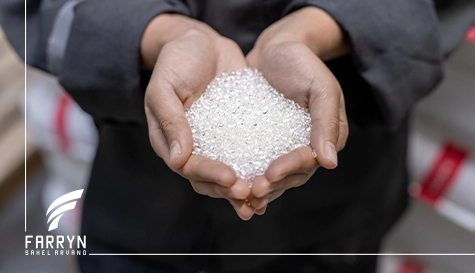
Urea is a white, water‑soluble organic compound produced by petrochemical complexes through the chemical synthesis of ammonia and carbon dioxide.
Applications of Urea
Urea is considered one of the most widely used nitrogen-based fertilizers globally. More than 90% of global urea production is utilized in the agricultural sector.
In agricultural applications, urea functions as a nitrogen source for soil enrichment, improving the growth and productivity of crops such as grains and cotton.
Compared with other nitrogen fertilizers, urea offers several operational advantages:
- Higher nitrogen content (approximately 46%)
- Competitive pricing
- Rapid solubility in water
These advantages have made urea a preferred fertilizer for farmers across numerous agricultural markets worldwide.
However, urea’s applications extend far beyond agriculture. It is widely used across multiple industrial sectors, including:
- Production of resins and adhesives (e.g., urea‑formaldehyde resins)
- Manufacturing of livestock and poultry feed supplements
- Automotive industry applications as a diesel emission reduction agent
- Flavor‑enhancing additives in tobacco products
- Production of hair removal products such as depilatory creams
- Cosmetic products including hair conditioners, facial cleansers, bath oils, and lotions
- Manufacturing fire‑extinguishing agents used in fire suppression systems
- Production of tooth‑whitening products, laundry detergents, and dishwashing liquids
- Use as an anti‑corrosion alternative to road de‑icing salt
- Textile manufacturing
- Pharmaceutical production
In essence, urea is not only a strategic agricultural commodity, but also a critical input across numerous industrial supply chains.
Types of Urea Available for International Trade from Iran
In international commodity markets, urea is typically traded in two primary forms.
Prilled Urea
Prilled urea consists of small, nearly spherical granules. Due to its smaller particle size and lower production cost, it is commonly supplied to markets where product specification requirements are less stringent.
Prilled urea performs effectively in dry climatic conditions. However, in high‑humidity environments, it may degrade more rapidly during storage and handling.
Granular Urea
Granular urea features larger and mechanically stronger particles compared with prilled urea.
This form demonstrates greater stability during bulk storage, cargo handling, and maritime transportation, making it preferable in major fertilizer markets such as:
- Europe
- Latin America
- South Asia
India—one of the largest international buyers engaged in importing urea from Iran—primarily purchases granular urea.
Which Type of Urea Is More Suitable When Importing from Iran?
The suitability of each urea type depends largely on soil characteristics, crop type, and climatic conditions in the importing country.
For example:
- Light soils with high absorption capacity are generally better suited for prilled urea.
- Heavier soils typically perform better with granular urea.
Therefore, companies engaged in importing and trading urea from Iran should carefully evaluate the agricultural requirements and fertilizer specifications of their domestic markets before selecting the appropriate product type.
Major Countries Importing Urea from Iran
Urea produced in Iran is supplied to a wide range of international markets.
India
In recent years, India has been the largest importer of Iranian urea.
Due to its strong dependence on nitrogen fertilizers for ensuring agricultural productivity and food security, India consistently appears among the leading buyers of granular urea from Iran.
Turkey
Turkey also satisfies part of its domestic fertilizer demand through imports of urea from Iran.
Iraq and Afghanistan
Following Turkey, Iraq and Afghanistan represent key regional markets for importing prilled urea from Iran.
Several factors strengthen Iran’s position in these markets:
- Geographic proximity
- Cultural and linguistic connections
- Efficient cross‑border land transportation corridors
African Markets
In recent years, urea imports from Iran have expanded toward African markets.
Countries such as:
- Kenya
- Tanzania
- Nigeria
have shown increasing demand for nitrogen fertilizers.
Africa’s population exceeds 1.3 billion people, and the continent is experiencing rapid urbanization. As agricultural production expands, the demand for fertilizers—particularly urea—continues to grow.
Central Asia
Another emerging destination for urea imports from Iran includes Central Asian countries, such as:
- Uzbekistan
- Turkmenistan
- Kazakhstan
Strengthening economic cooperation and improved rail transport connectivity through the North–South transport corridor have contributed to the expansion of this trade.
European Markets
Trade dynamics involving urea imports from Iran into European markets have evolved in recent years.
According to reports by Pardis Petrochemical Company, more than 520,000 tons of urea have been supplied to European buyers, indicating the gradual expansion of Iranian urea in European fertilizer markets.
Overall, companies involved in importing and trading urea from Iran should diversify their sourcing and distribution markets rather than relying on a single country.

Regulatory Framework and Trade Procedures for Urea Shipments from Iran
Companies engaged in importing urea from Iran should also be familiar with the regulatory framework governing shipments originating from Iranian petrochemical producers.
Seasonal Restrictions and Domestic Supply Priority
Because Iran’s agricultural sector relies heavily on urea fertilizers, exports may occasionally be restricted during peak planting seasons, particularly in spring and autumn, to ensure adequate domestic supply.
During these periods, authorities may implement policies such as:
- Export quotas for petrochemical producers
- Limitations on export volumes allocated to international markets
These factors may affect the availability and shipment scheduling of urea cargoes for foreign buyers.
Registration in Iran’s Integrated Trade System
All shipments of urea originating from Iran must be registered in the Integrated Trade System of Iran (Samaneh Jame Tejarat).
This platform is used to:
- Monitor commodity flows
- Maintain transparency in trade operations
- Track export volumes
Without proper registration, customs clearance for international shipments cannot be completed.
Required Shipping and Trade Documentation
Typical documentation required for international trade of urea cargoes from Iran includes:
- Commercial Export License of the supplier
- Proforma Invoice
- Product Analysis Certificate issued by an accredited laboratory or petrochemical producer
- Environmental Compliance Permit
- Certificate of Origin
- Bill of Lading
Urea Customs Tariff Code (HS Code)
In the international commodity classification system, urea is categorized under HS Code 31021000.
This code determines:
- Applicable customs duties
- Tax calculations
- Statistical trade classification
Incorrect declaration of the HS code can lead to customs delays or rejection of the shipment.

Key Challenges in Importing Urea from Iran
Companies involved in importing urea from Iran may face several operational challenges.
One major factor is the volatility of global urea prices, which is influenced by:
- Natural gas prices (the primary feedstock for urea production)
- Global fertilizer demand
- Seasonal agricultural cycles
- Export policies of competing producer countries
These fluctuations can complicate procurement planning and long‑term supply contracts.
Additionally, financial restrictions and international banking limitations related to sanctions can affect payment processing, currency transfers, and marine cargo insurance arrangements.
Such factors may increase both the operational complexity and financial risk of international fertilizer procurement.
Domestic regulatory changes may also influence supply conditions. Adjustments to export policies or production allocation decisions can impact shipment schedules and availability for foreign buyers.
Overcoming Trade Challenges with the Right Logistics Partner
Despite these challenges, importing and trading urea from Iran presents substantial commercial opportunities.
Global demand for fertilizers continues to rise due to:
- Population growth
- Increasing food demand
- Agricultural expansion in developing economies
Combined with Iran’s large-scale production capacity, these trends position Iranian urea as a competitive product in global fertilizer markets.
To maximize these opportunities, international buyers should collaborate with reliable logistics and maritime transport partners capable of managing cargo movements efficiently.
With the support of Farryn Sahel Arvand, companies can plan logistics operations more effectively, stay informed about evolving regulations and shipping documentation requirements, and conduct urea trade from Iran with greater operational certainty and efficiency.