
Transshipment vs. Cross-Stuffing: A Comprehensive Comparison of Critical Maritime Transport Methods
In the landscape of international shipping, achieving rapid, secure, and cost-effective cargo movement remains a primary challenge for corporations and traders. Transshipment and cross-stuffing are two common operational strategies for managing this movement, each possessing distinct advantages and limitations. Understanding the nuances and applications of each method not only optimizes supply chains but also mitigates costs, saves time, and reduces the risk of cargo damage. This article provides a comprehensive guide to decision-making in international transport by examining the operational features, advantages, disadvantages, and practical applications of both transshipment and cross-stuffing.
What is Transshipment?
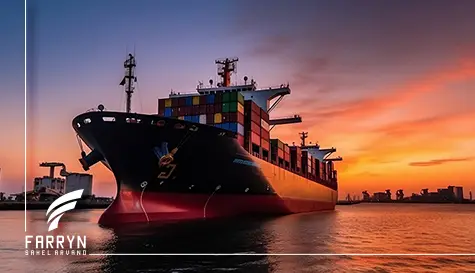
Transshipment refers to an operational process in international transport where cargo or containers are transferred from one carrier to another without opening the containerized unit. This transfer typically occurs at intermediate ports, with the primary objective of continuing the cargo’s transit to the final destination via a different vessel, truck, or rail service.
A critical aspect of transshipment is that the cargo usually remains intact, thereby lowering the risk of damage compared to methods involving cargo handling and re-stowing. Transshipment is prevalent in long-haul or high-traffic international routes where direct services are unavailable, necessitating passage through logistics hubs such as Singapore, Rotterdam, or Dubai.
Transshipment may involve either full container loads or partial cargo units; however, in standard operations, containers are moved without being breached. Regarding documentation, a new Bill of Lading (B/L) may be required or intermediate customs formalities may be necessary; nonetheless, this process is generally faster and more cost-effective than cargo de-vanning and re-stuffing. Consequently, transshipment is an efficient operational solution for supply chain optimization and represents a cornerstone of maritime and multimodal transport.
Advantages and Disadvantages of Transshipment
As a primary international transport method, transshipment offers specific benefits and limitations that are decisive factors for companies and traders.
Advantages of Transshipment
- Cost Reduction: Since units are transferred without de-vanning, handling and re-loading costs are significantly minimized.
- Time Efficiency: Moving intact containers accelerates operational throughput and minimizes delays associated with cargo handling.
- Cargo Protection: Transshipment reduces the risk of damage or pilferage, as the cargo remains secured within the container throughout the transit.
- Efficiency in Long-haul/High-frequency Routes: On international routes lacking direct services, transshipment facilitates optimized supply chain management via established logistics hubs.
Disadvantages of Transshipment
- Dependency on Intermediate Ports: Cargo must pass through transshipment hubs, which may lead to delays due to port congestion or scheduling mismatches.
- Additional Customs Formalities: In certain jurisdictions, even if the container remains sealed, specific customs documentation or the issuance of a new B/L may be required.
- Requirement for Precise Coordination: Successful transshipment demands rigorous planning and synchronization between vessel operators, carriers, and port terminals to avoid operational bottlenecks.
What is Cross-Stuffing?
Cross-stuffing refers to a process where cargo is transferred from one container or carrier to another. Unlike transshipment, cross-stuffing involves de-vanning the cargo and re-loading it. This method is generally utilized at ports or logistics hubs when the primary container cannot continue its journey to the final destination or when a change in the mode of transport is required.
A key feature of cross-stuffing is that opening the container allows for quality control, sorting, and the consolidation of shipments. Therefore, this method is applied when direct origin-to-destination transport is unfeasible, or when transferring between different transport modes (e.g., vessel to truck or rail) is necessary.
In terms of documentation and customs, cross-stuffing is typically more complex than transshipment, as re-loading and container swapping may necessitate the issuance of a new B/L, updates to customs data, and coordination with multiple logistics stakeholders. Furthermore, while the implementation costs and transit times are higher compared to transshipment, it offers greater flexibility for cargo management and consolidation.

Advantages and Disadvantages of Cross-Stuffing
Cross-stuffing, as an alternative or supplementary method to transshipment, entails specific considerations that are significant for freight forwarders and traders.
Advantages of Cross-Stuffing
- High Flexibility: De-vanning and re-loading cargo enables the management of consolidated or customized shipments.
- Access to Restricted Routes: When a primary container cannot follow a direct route, cross-stuffing allows for transit continuity using various transport modes.
- Quality Control and Sorting: Opening shipments allows for inspection, segregation, and re-packing, enabling the identification of damaged or incomplete goods before they proceed.
- Utility in Inland Logistics and Minor Ports: This method is highly effective in minor ports or environments with limited heavy-loading equipment and yard space.
Disadvantages of Cross-Stuffing
- Higher Costs: The process of de-vanning and re-loading increases operational expenses.
- Extended Lead Times: The handling process and synchronization with various carriers are time-intensive.
- Risk of Cargo Damage: Every instance of handling increases the potential for damage, loss, or contamination.
- Complexity of Customs Documentation: Issuing new B/Ls and coordinating across multiple logistics entities can lead to administrative complexity.
Key Differences Between Transshipment and Cross-Stuffing
Understanding the distinctions between these two methods is vital for traders, freight forwarders, and logistics managers, as the appropriate selection leads to optimized costs, reduced transit times, and lower cargo risk.
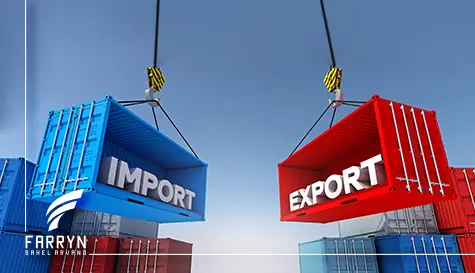
- Mode of Transfer: In transshipment, containers are moved intact between carriers. In cross-stuffing, cargo is removed and re-stowed.
- Time and Speed: Transshipment is faster and more efficient. Cross-stuffing is more time-consuming due to the physical handling of the cargo.
- Cost: Transshipment is generally more cost-effective due to simplified handling. Cross-stuffing incurs higher costs due to labor-intensive cargo management.
- Risk and Safety: Transshipment offers lower risk as cargo remains in the sealed container. Cross-stuffing involves higher risk due to multiple handling instances, yet it permits quality inspections.
- Applications: Transshipment is favored for long-haul routes and major international hubs. Cross-stuffing is preferred for complex routes, minor ports, or when cargo segregation is required.
Critical Factors for Choosing Between Transshipment and Cross-Stuffing
The decision-making process relies on cargo characteristics, transit routes, budget, and operational constraints.
- Cargo Sensitivity: For fragile or high-risk cargo, transshipment is the preferred option. For cargo requiring sorting or consolidation, cross-stuffing is more applicable.
- Maritime Route: Transshipment is superior in long-haul, high-frequency routes. Cross-stuffing provides an advantage in complex routes or minor ports with restricted direct access.
- Cost and Budget: Transshipment is typically the lower-cost solution for budget-sensitive operations, while cross-stuffing is chosen for specific operational requirements.
- Lead Times: If delivery speed is paramount, transshipment is faster. Cross-stuffing transit times must be factored into the overall delivery schedule.
- Documentation and Customs: Transshipment usually entails simpler documentation. Cross-stuffing requires new B/Ls and enhanced coordination with customs and logistics providers.
- Volume: Transshipment is more practical for high-volume, full-container operations, whereas cross-stuffing is more suitable for consolidated or multi-part shipments.
Transshipment vs. Cross-Stuffing
In summary, transshipment moves containers intact, serving as a rapid, cost-effective, and secure option for long-haul transit, whereas cross-stuffing involves de-vanning and re-loading, offering flexibility for restricted routes and quality control at the expense of time and cost. For example, Farryn Sahel Arvand utilizes advanced equipment to facilitate both methods, providing traders with the opportunity to optimize supply chains and reduce the risk of cargo damage.