What Is the Difference Between Bulk Cargo and Break Bulk Cargo?
Many individuals mistakenly equate bulk and break bulk shipping in maritime transport due to the similarity in terminology. In reality, however, these two methods are fundamentally different, each exerting a distinct impact on packaging requirements, cost structures, and cargo handling procedures. Therefore, making an informed decision requires a clear understanding of both concepts.
In this article, we examine the differences between bulk and break bulk, outline their respective applications, and evaluate whether break bulk shipping or maritime bulk transport is more suitable for specific logistical needs.
What Is Bulk Shipping?
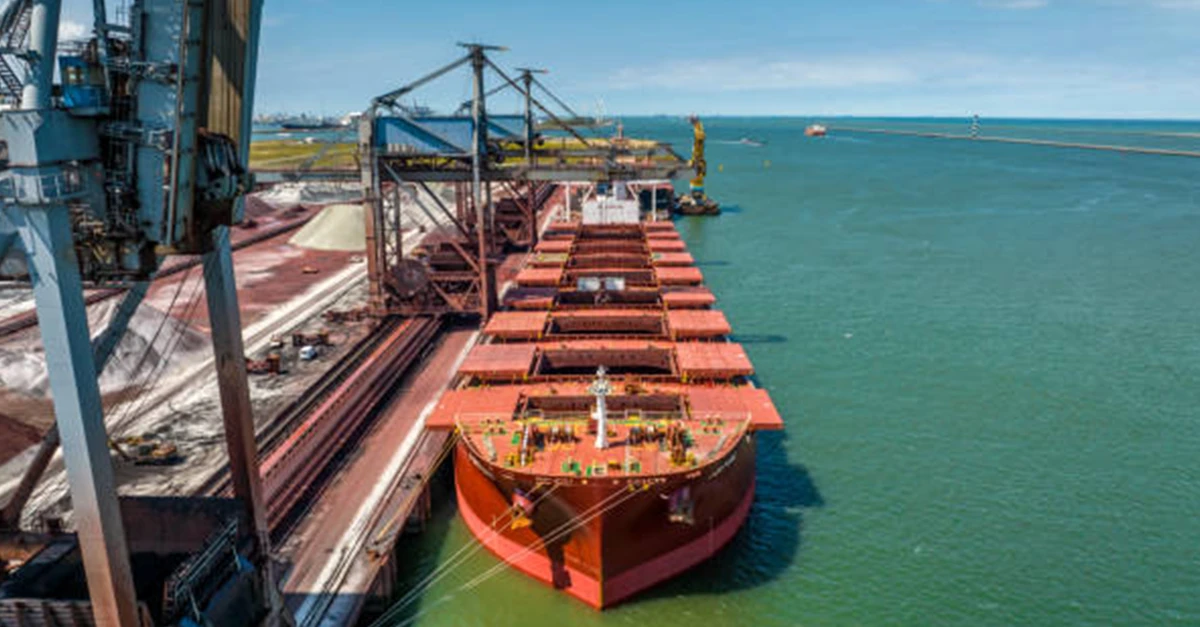
Commodities such as cement and coal, which are loaded onto vessels in loose form without packaging, are classified as bulk cargo. In maritime bulk transport, these goods are directly loaded into the vessel’s holds, tanks, or cargo compartments and shipped to their destination.
Bulk cargo is generally classified into three categories:
1) Dry Bulk
Dry Bulk Cargo includes solid, dry commodities such as grains (wheat, corn, barley), minerals (iron ore, bauxite, phosphate), solid fuels (coal, coke), and cement.
These commodities are transported by dry bulk carriers, and loading or discharge operations are conducted using conveyor belts, loaders, or cranes.
2) Liquid Bulk
This category encompasses chemical substances and liquid commodities, such as crude oil, petroleum derivatives, liquefied gases (LPG and LNG), and edible oils.
These shipments are transported by tanker vessels or liquid bulk carriers equipped with one or multiple large storage tanks. Depending on the nature of the liquid cargo, such vessels are constructed in various specialized designs and configurations.
-
Tanker vessels specifically designed for the transportation of crude oil and petroleum products
-
Specialized chemical tankers suitable for the carriage of acids, solvents, and other chemical substances
-
Liquefied gas carriers utilized for the transportation of LNG and LPG

3) Minor Bulk
Certain solid commodities, due to their substantial size and volume, cannot be packaged, such as timber, lumber, steel sheets, reinforcing bars, and coiled wire rods.
For transporting such cargo, geared bulk carriers or multipurpose vessels are utilized. These vessels are capable of handling heavy and oversized shipments that cannot be accommodated within containers.
How Is Break Bulk Shipping Conducted?
Break bulk shipping applies to goods that are prepared as individual packages or palletized units. In this method, items such as bags, boxes, rolls, or pallets are arranged and loaded directly onto the deck or into the vessel’s hold. Cargoes such as coffee or rice sacks, steel coils, machinery crates, and oversized tires fall within this category.
Break bulk vessels are capable of transporting various types of cargo in different sizes and weights, either horizontally or vertically. Depending on operational requirements, these vessels are available in several configurations:
Single Decker
These vessels feature a single cargo deck and are primarily utilized in smaller ports or locations where large vessels are unable to berth.
Tween Decker
Tween deck vessels are equipped with two cargo decks, providing additional space for cargo stowage. They are typically accommodated in larger ports and are commonly employed for heavier consignments.
Box Holds
Break bulk vessels with multiple cargo levels are fitted with rectangular cargo holds. Consequently, they are well-suited for transporting heavy and oversized cargoes that are boxed or packaged. Such goods are stowed systematically and securely within the holds for safe transport.
What Is the Difference Between Bulk and Break Bulk Shipping?
In general, when referring to bulk maritime transport, it implies that cargo is moved without final packaging. In contrast, under break bulk conditions, goods are packaged; however, since they cannot be accommodated within standard containers, they are loaded directly onto the vessel.
This distinction affects both the loading method and operational speed. In bulk transport, the commodity is discharged directly into the vessel’s hold or tank, whereas in break bulk operations, each unit is individually loaded using cranes or forklifts. Consequently, it is evident that the former method facilitates faster loading.
From a cost perspective, comparable conditions may be evaluated: for large-volume cargo, bulk shipping can be more economical, as it eliminates packaging expenses and reduces reliance on specialized handling equipment. Nevertheless, when goods are packaged, there is generally greater assurance in terms of safety and cargo integrity.
Which Method Is More Suitable for Our Cargo?
The choice between bulk and break bulk shipping depends on the nature, volume, weight, and packaging requirements of our cargo. Undoubtedly, for large-volume raw materials, bulk transport is faster and more cost-effective. However, if the cargo is sensitive to moisture, it is advisable to package it properly and ship it via the break bulk method. In addition, transportation routes and budget considerations must also be taken into account.
To make an informed decision, we can seek consultation from the experts at Farryn Sahel Arvand. With their experience and professional expertise, they assess cargo specifications and recommend the most suitable shipping method. This approach enables us to execute logistics operations with minimal cost and maximum safety.