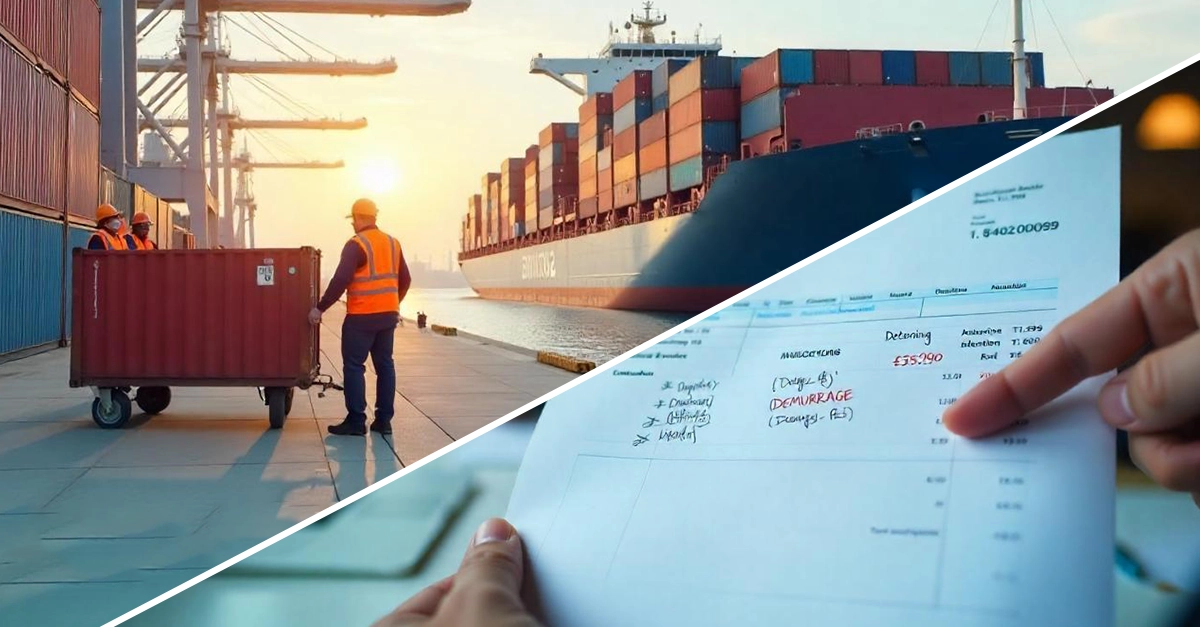
What is the Difference Between Demurrage and Detention? | A Comprehensive Guide to Maritime Shipping Terms
In container shipping, businesses strive to avoid Demurrage and Detention (D&D) fees at all costs. These charges can significantly impact overall supply chain expenses, lead to price hikes, and create extensive administrative hurdles and operational challenges. In this article, we will define these two types of charges and clarify the key differences between them.
What is Demurrage?
Demurrage in maritime transport refers to the penalty charged for delays in discharging and returning containers within the contractually agreed period.
Shipping lines typically provide a “Free Time” period for each shipment, which usually ranges from 2 to 15 days, depending on the type of cargo and the conditions at the destination port. Once the vessel arrives and the container is discharged at the terminal, the consignee (owner of the goods) is responsible for clearing the cargo and returning the container within this allocated timeframe.
If the container remains inside the port or terminal beyond this free time due to delays in customs clearance or pickup, the cargo owner or charterer must pay a daily penalty known as demurrage.
Why is Demurrage Important?
Demurrage is designed to incentivize the prompt pickup of cargo, thereby preventing port congestion and bottlenecks in customs warehouses. From a legal standpoint, demurrage is considered a form of liquidated damages, compensating the carrier for the period the container is held out of service and unavailable for the next shipment cycle.
What is Detention?
Detention is the fee charged for the late return of a container to the shipping line’s designated facility after it has been moved out of the port.
When a container is picked up from the port or terminal to be stripped (unloaded) at the consignee’s warehouse, the shipping line sets a specific deadline for its return (empty return). If this deadline passes and the container has not been returned to the carrier’s yard, the cargo owner or charterer must pay a daily late fee known as detention.
Why is Detention Important?
Containers are the primary assets of shipping lines, which are leased or utilized on a daily basis. If a container is returned late, the carrier loses the opportunity to use it for subsequent bookings, leading to a loss of revenue. Detention fees compel users to ensure a fast equipment turnaround, keeping the global logistics network fluid.
What is the Difference Between Demurrage and Detention?
As we have seen, both demurrage and detention are penalties related to delays in container handling. The primary difference lies in the location of the container at the time of the delay:
- Demurrage occurs when the container is still inside the port or terminal, and the delay is in its clearance or pickup.
- Detention occurs when the container has been moved out of the port (for inland transport/unloading) but is returned to the shipping line’s custody later than the agreed-upon deadline.
How to Reduce Demurrage and Detention Costs?
One of the top priorities for traders in maritime logistics is to minimize or eliminate D&D charges, as these costs can sometimes escalate to a point where they consume the entire profit margin of a deal. Here are several practical strategies to mitigate these risks:
1. Precise Planning and Pre-clearance
The most effective solution is meticulous planning. Ensure all permits, licenses, and clearance documentation are prepared well before the vessel’s arrival to streamline the customs process.
2. Negotiating Extended Free Time
Before signing the Contract of Affreightment or booking the shipment, check the allocated free time. If you anticipate delays, negotiate for an extension of free time with the shipping line or freight forwarder right from the start.
3. Real-time Container Tracking
Utilize online tracking systems and digital logistics platforms to monitor the exact Estimated Time of Arrival (ETA). This allows for immediate action for discharge and clearance the moment the vessel berths.
4. Partnering with Professional Logistics Providers
Specialized logistics companies are well-versed in port operations, customs regulations, and drayage. They plan every step with precision to prevent errors and time wastage. Partnering with experts is often the most cost-effective way to avoid hidden fees.
Time Management: The Key to Reducing Hidden Costs
In international trade, time is a critical asset directly tied to profitability. To avoid the trap of demurrage and detention penalties, one must approach the shipping process with proactive planning and complete documentation.
In this journey, the support of a professional team is decisive. Given the extensive expertise and specialized knowledge of Farryn Sahel Arvand, businesses can effectively control their logistics costs and accelerate their commercial operations with confidence.